
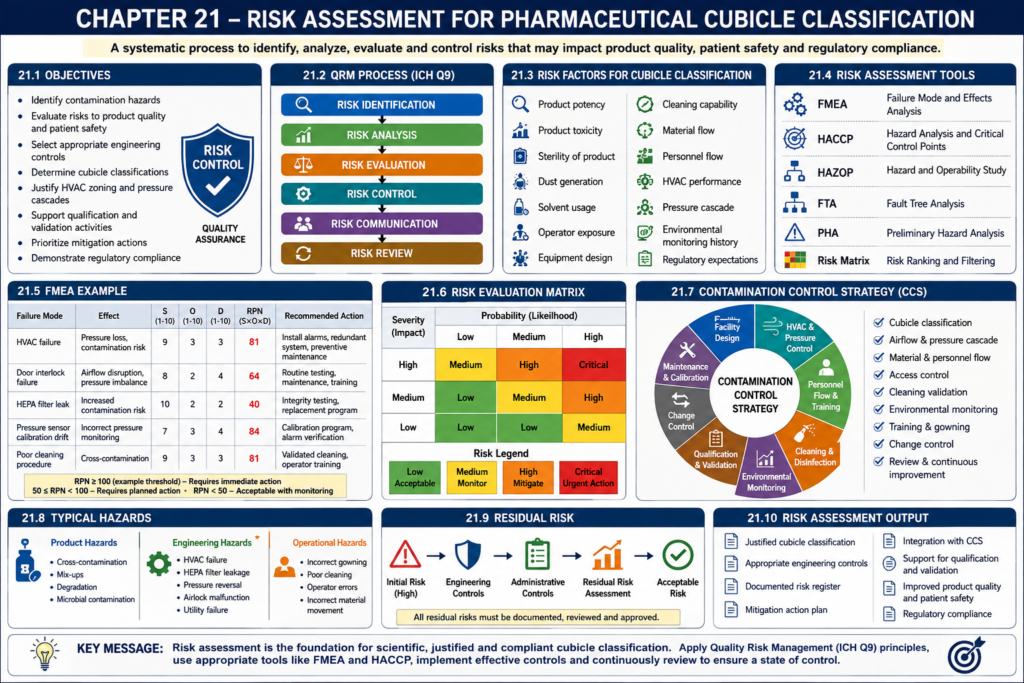
Chapter 21-Risk Assessment for Pharma Cubicle Classification.
21.1 Introduction Risk assessment is the scientific foundation of modern pharmaceutical facility design. Regulatory authorities no longer accept cubicle classifications,
21.1 Introduction Risk assessment is the scientific foundation of modern pharmaceutical facility design. Regulatory authorities no longer accept cubicle classifications,
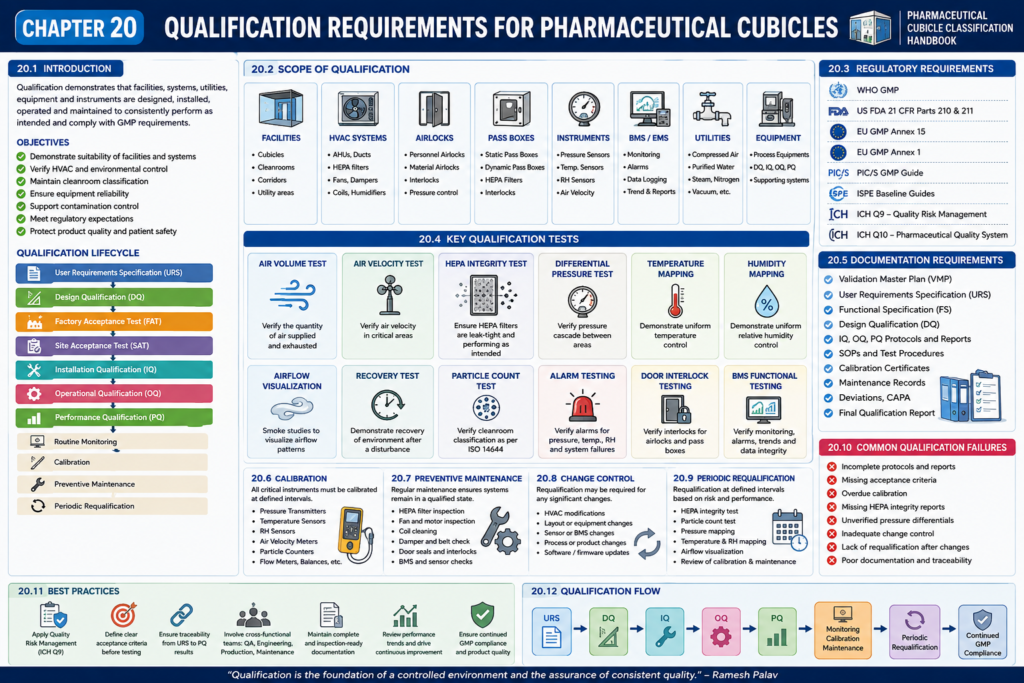
20.1 Introduction Qualification is a documented process that demonstrates that facilities, utilities, equipment, instruments, and environmental control systems are properly
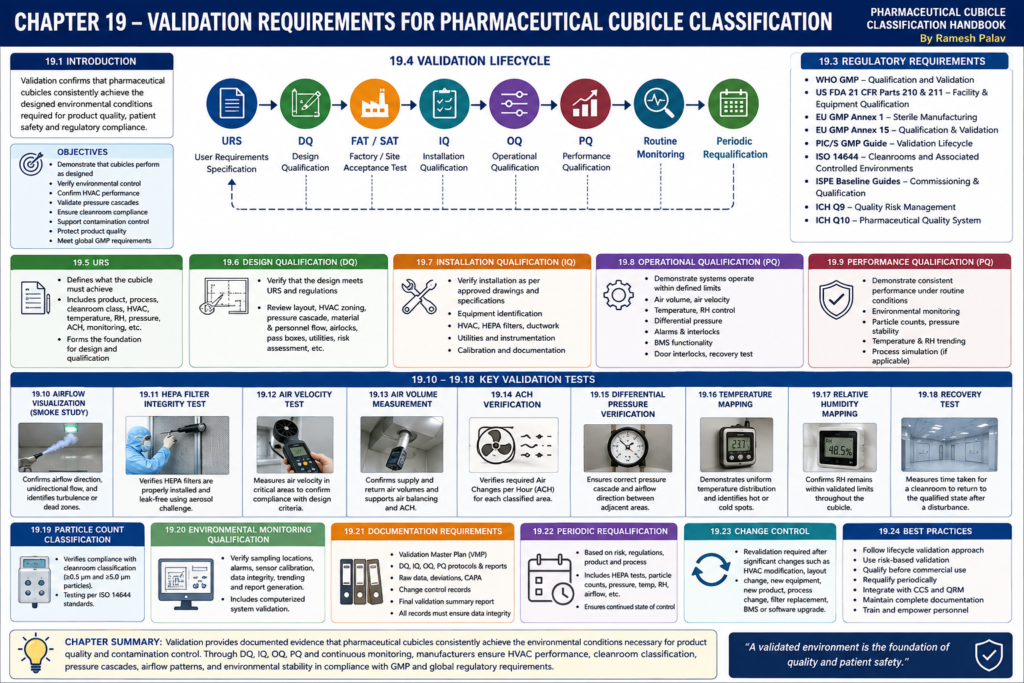
19.1 Introduction Validation is a documented process that provides a high degree of assurance that pharmaceutical facilities, equipment, utilities, and
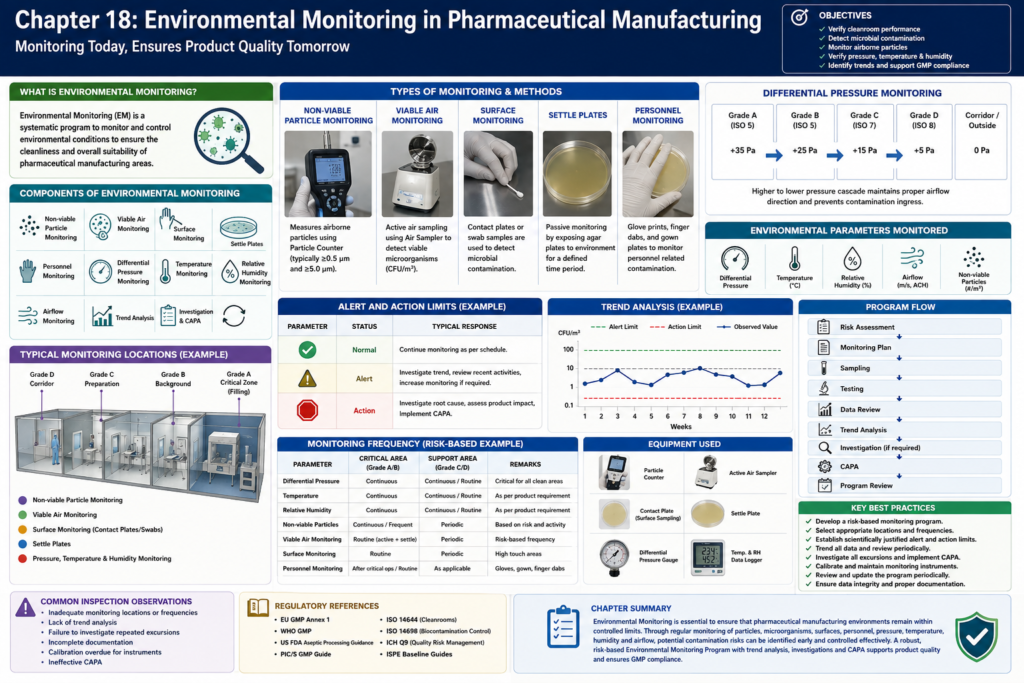
18.1 Introduction Environmental Monitoring (EM) is a systematic program used to verify that pharmaceutical manufacturing environments remain in a state
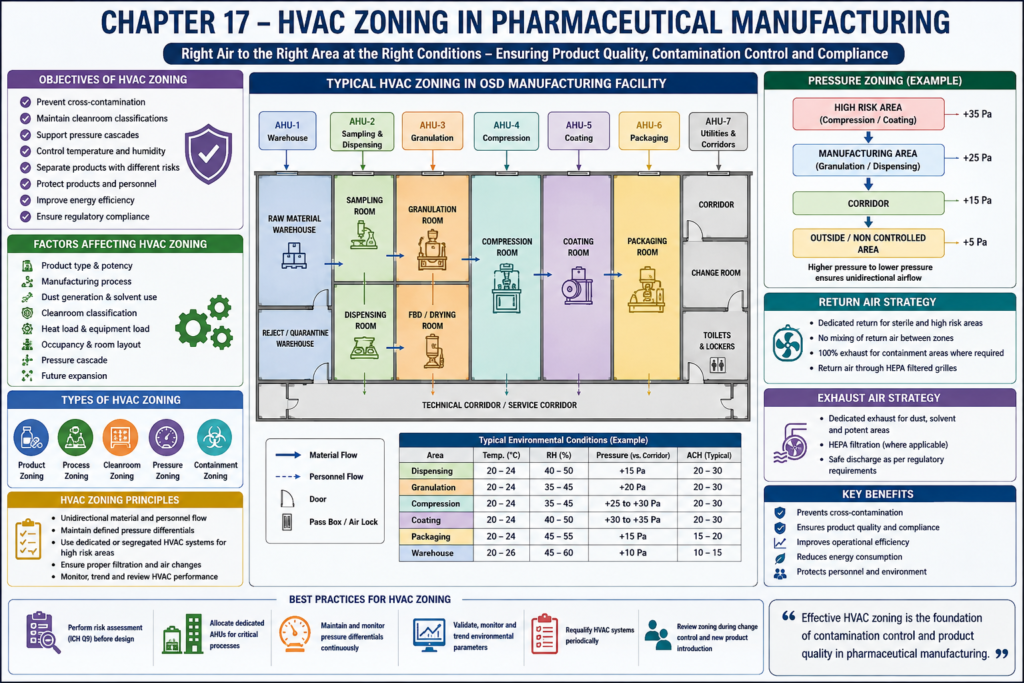
17.1 Introduction HVAC zoning is one of the most critical engineering principles in pharmaceutical facility design. An effective zoning strategy
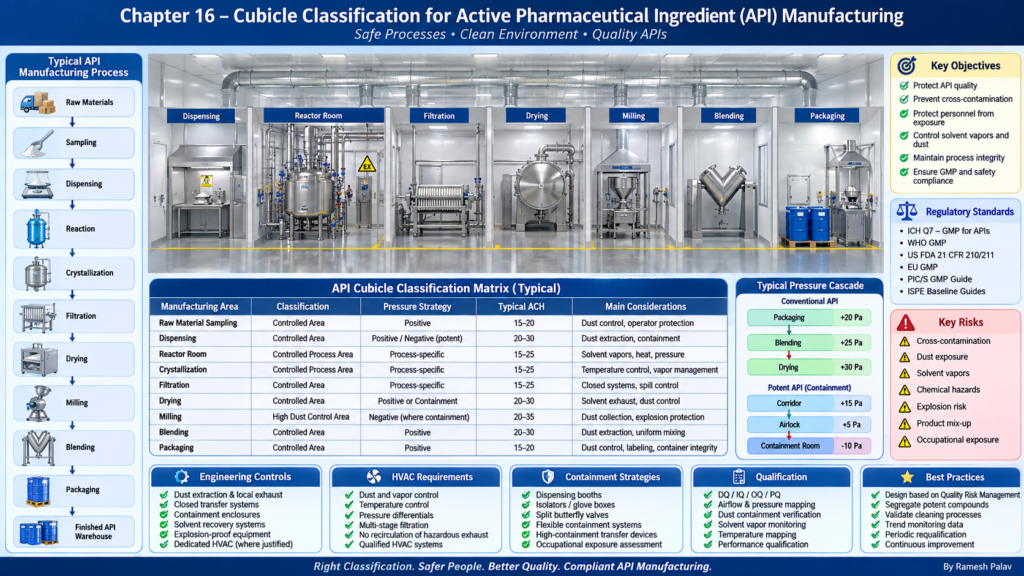
16.1 Introduction Active Pharmaceutical Ingredient (API) manufacturing differs significantly from finished dosage form manufacturing due to the complexity of chemical
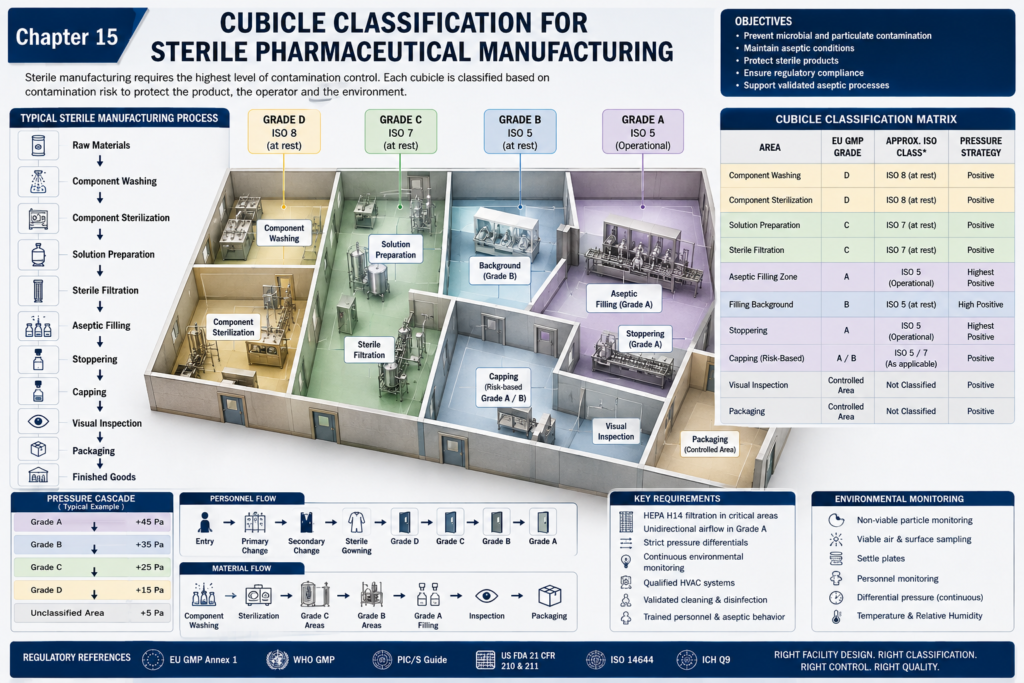
15.1 Introduction Sterile pharmaceutical manufacturing represents the highest level of contamination control within the pharmaceutical industry. Unlike Oral Solid Dosage
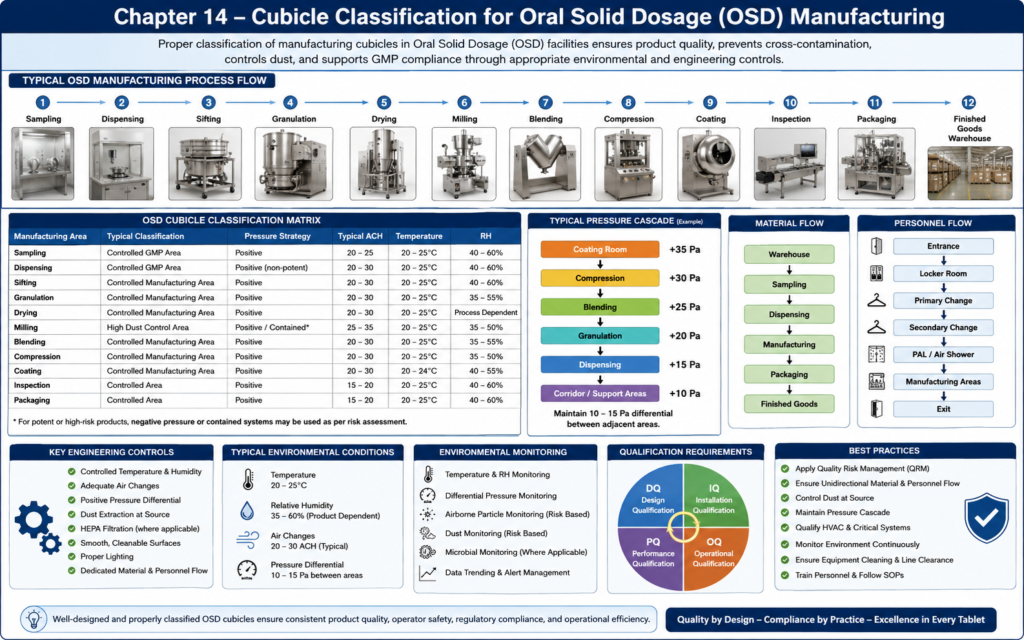
14.1 Introduction Oral Solid Dosage (OSD) manufacturing is the most widely used pharmaceutical manufacturing process worldwide. It includes the production
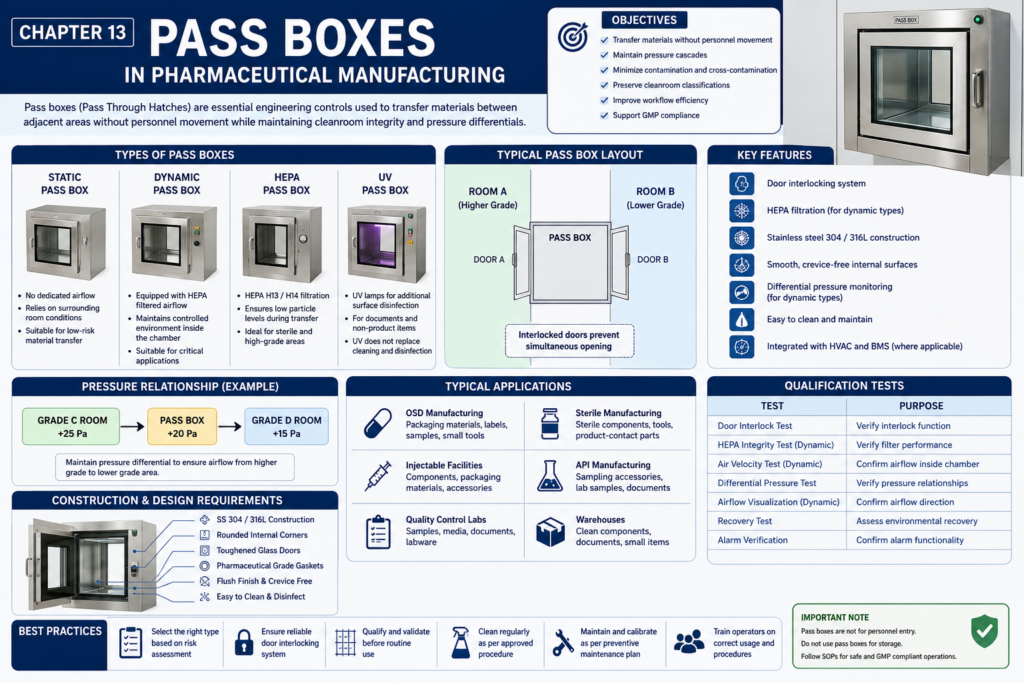
13.1 Introduction A Pass Box (also known as a Pass Through Hatch or Transfer Hatch) is a controlled transfer device
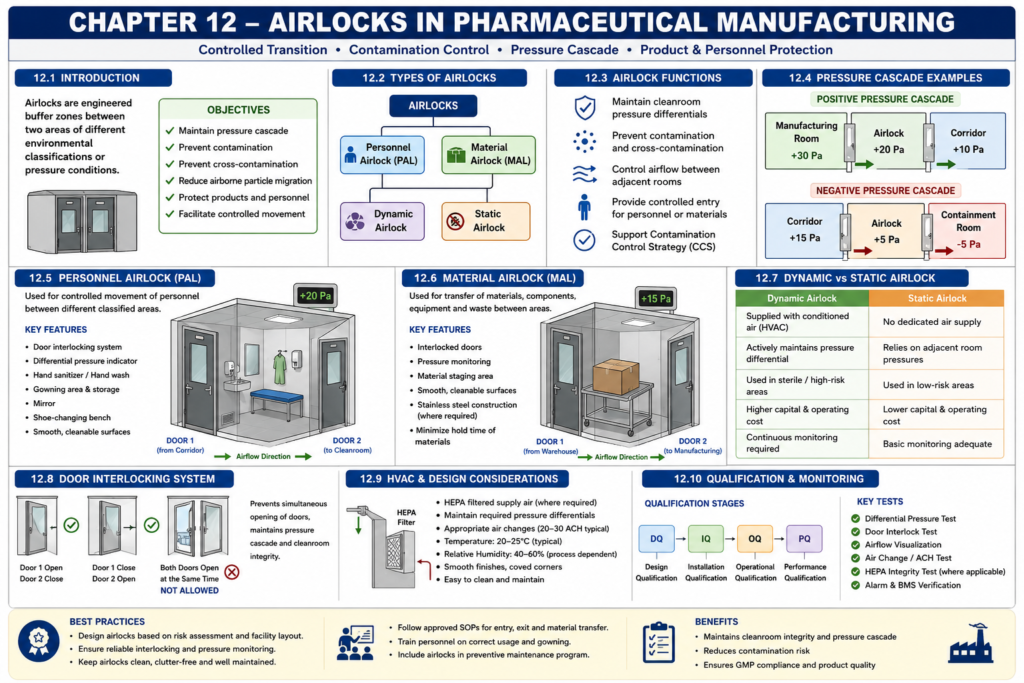
12.1 Introduction Airlocks are one of the most important engineering controls used in pharmaceutical manufacturing facilities. They provide a controlled