
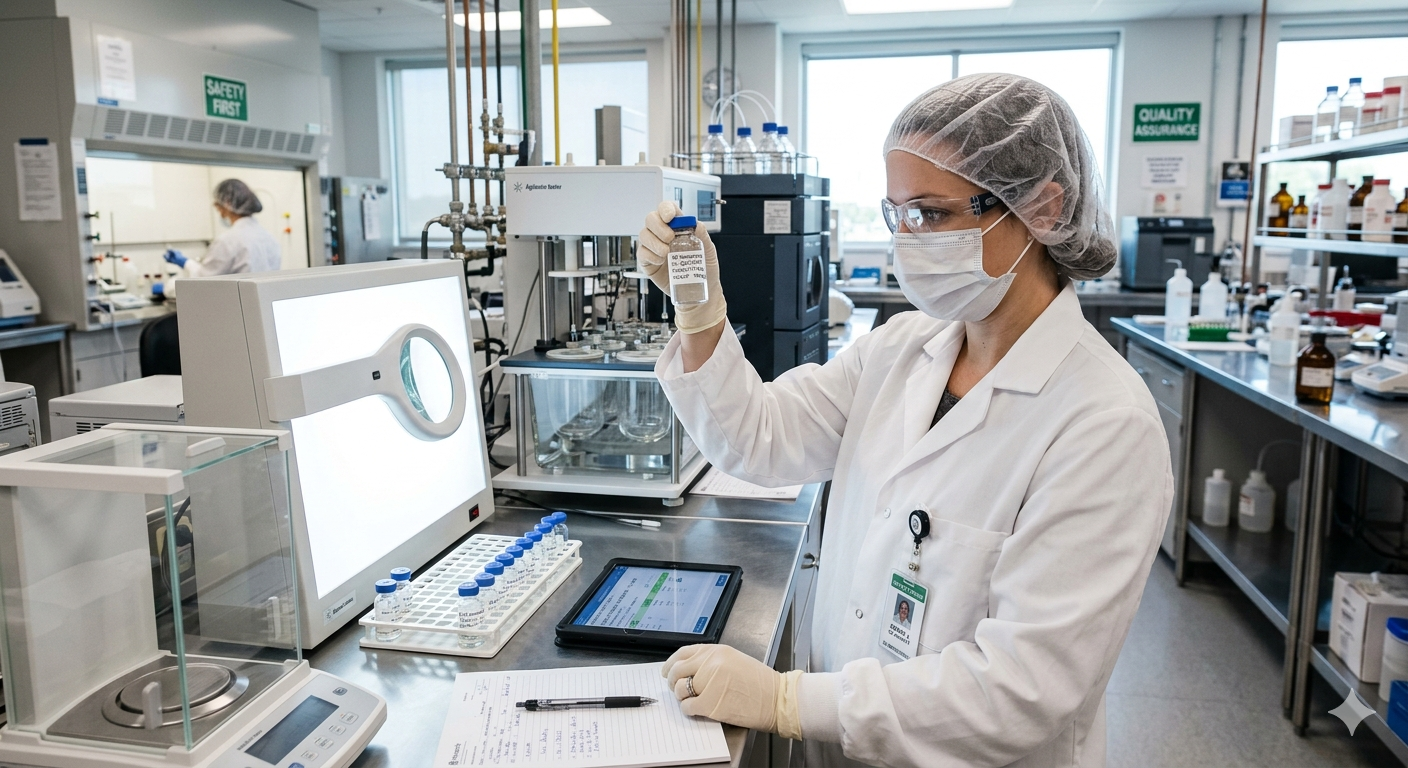
What Is Quality in Pharmaceutical Company?
The pharmaceutical industry is one of the most highly regulated industries in the world because it directly impacts human health and safety. Every tablet, capsule, injection, or syrup manufactured must meet strict quality standards before reaching patients. This is why quality in pharmaceutical company operations is considered the foundation of the entire pharma manufacturing process.
Pharmaceutical quality ensures that medicines are safe, effective, pure, and manufactured consistently according to regulatory standards. Without a strong quality system, pharmaceutical companies can face product recalls, regulatory actions, financial losses, and risks to patient health.
In this complete guide by Pharma Manufacturing Hub, you will learn everything about pharmaceutical quality management, including QA, QC, GMP, QMS, documentation practices, regulatory guidelines, and career opportunities in pharma quality departments.
Introduction to Quality in Pharmaceutical Industry
Quality in the pharmaceutical industry refers to the assurance that every medicine manufactured consistently meets predefined standards for safety, efficacy, purity, identity, and strength.
Unlike many other industries, pharmaceutical products directly affect human life. A small error in manufacturing or testing can lead to severe health consequences. Therefore, pharmaceutical companies implement robust quality systems throughout the product lifecycle.
Quality is not only the responsibility of the Quality Assurance (QA) or Quality Control (QC) department. It is the responsibility of every employee involved in:
- Manufacturing
- Packaging
- Warehousing
- Engineering
- Maintenance
- Regulatory Affairs
- Quality departments
The primary objective of pharmaceutical quality management is to ensure that patients receive medicines that are:
- Safe to consume
- Effective for treatment
- Free from contamination
- Manufactured consistently
Definition of Pharmaceutical Quality
Pharmaceutical quality can be defined as:
“The degree to which a pharmaceutical product consistently meets predefined specifications, regulatory requirements, and patient expectations for safety, efficacy, purity, identity, and strength.”
In simple words, pharmaceutical quality means producing medicines correctly every single time without defects or contamination.
According to regulatory authorities such as World Health Organization, quality must be built into the product during manufacturing and not only tested at the end.
Importance of Quality in Pharma Manufacturing
Quality plays a critical role in pharmaceutical manufacturing because medicines directly impact human health.
Why Quality is Important in Pharma
1. Patient Safety
Poor-quality medicines can cause serious side effects, treatment failure, or even death.
2. Regulatory Compliance
Pharmaceutical companies must comply with regulations from authorities such as:
- United States Food and Drug Administration
- Medicines and Healthcare products Regulatory Agency
- European Medicines Agency
- World Health Organization
Failure to maintain quality can result in warning letters, import bans, or plant shutdowns.
3. Brand Reputation
Consistent product quality builds customer trust and company reputation.
4. Reduced Product Recalls
A strong quality management system minimizes manufacturing errors and market complaints.
5. Business Growth
High-quality pharmaceutical products help companies expand into regulated global markets.
Key Elements of Pharmaceutical Quality
Pharmaceutical quality is built around five major elements.
1. Safety
Medicines must be safe for patient use and free from harmful contaminants.
Example:
Injectable products must be sterile and pyrogen-free to avoid infections.
2. Efficacy
The medicine should produce the intended therapeutic effect.
Example:
An antibiotic tablet must effectively eliminate bacterial infection as intended.
3. Purity
Products must be free from contamination such as:
- Dust
- Microorganisms
- Cross-contamination
- Chemical impurities
Example:
Dedicated manufacturing areas are used for potent drugs to avoid cross-contamination.
4. Identity
The product must contain the correct active pharmaceutical ingredient (API).
Example:
Paracetamol tablets should contain only paracetamol as specified.
5. Strength
The medicine must contain the correct dosage strength.
Example:
A 500 mg tablet must contain exactly the acceptable limit of API according to pharmacopeial standards.
Role of Quality Assurance (QA)
What Is QA in Pharma?
QA in Pharma refers to all planned and systematic activities implemented to ensure products consistently meet quality standards.
QA focuses on preventing defects rather than detecting them.
Responsibilities of QA Department
- Preparation and approval of SOPs
- Batch record review
- Line clearance
- Deviation handling
- CAPA management
- Change control
- Internal audits
- Vendor qualification
- GMP compliance monitoring
- Documentation review
Real Industry Example
Before batch release, QA reviews the complete Batch Manufacturing Record (BMR) to ensure all manufacturing activities were performed correctly.
Role of Quality Control (QC)
What Is QC in Pharma?
QC in Pharma involves testing and analysis of raw materials, in-process samples, and finished products to verify compliance with specifications.
QC focuses on defect detection through laboratory testing.
Responsibilities of QC Department
- Raw material testing
- Finished product analysis
- Stability studies
- Environmental monitoring
- Water testing
- Instrument calibration
- Microbiological testing
- Retain sample management
Common QC Instruments
- HPLC
- UV Spectrophotometer
- GC
- Dissolution apparatus
- pH meter
Difference Between QA and QC
| Parameter | QA | QC |
|---|---|---|
| Full Form | Quality Assurance | Quality Control |
| Objective | Prevent defects | Detect defects |
| Focus | Process-oriented | Product-oriented |
| Main Activity | System implementation | Testing and analysis |
| Responsibility | Entire quality system | Laboratory testing |
| Approach | Proactive | Reactive |
Simple Understanding
- QA ensures processes are followed correctly.
- QC verifies products meet specifications.
Good Manufacturing Practices (GMP) and Quality
What Is GMP in Pharmaceutical Industry?
GMP in Pharmaceutical Industry refers to guidelines ensuring products are consistently manufactured and controlled according to quality standards.
GMP covers all manufacturing aspects including:
- Personnel hygiene
- Cleanroom maintenance
- Documentation
- Equipment qualification
- Validation
- Training
- Material handling
Objectives of GMP
- Prevent contamination
- Avoid mix-ups
- Ensure consistency
- Maintain traceability
- Protect patient safety
Example of GMP Practice
Operators wear proper PPE in cleanroom areas to minimize contamination risk.
Quality Management System (QMS) in Pharma
What Is Quality Management System Pharma?
A Quality Management System (QMS) is a structured framework of procedures, policies, and processes used to manage pharmaceutical quality effectively.
Major Components of Pharma QMS
1. Document Control
Ensures controlled and approved documentation.
2. Training Management
Employees receive GMP and SOP training regularly.
3. Deviation Management
Unexpected incidents are investigated and documented.
4. CAPA System
Corrective and preventive actions prevent recurrence of issues.
5. Change Control
All changes are evaluated before implementation.
6. Audit Management
Internal audits verify compliance status.
7. Risk Management
Potential risks are identified and controlled proactively.
Documentation and Data Integrity
Documentation is considered the backbone of pharmaceutical quality.
Why Documentation Is Important
“If it is not documented, it did not happen.”
Proper documentation ensures:
- Traceability
- Regulatory compliance
- Investigation support
- Batch history review
Important GMP Documents
- SOPs
- BMR/BPR
- Logbooks
- Validation protocols
- Specifications
- Analytical reports
Data Integrity Principles
Pharma companies follow ALCOA+ principles:
- Attributable
- Legible
- Contemporaneous
- Original
- Accurate
Additional principles include:
- Complete
- Consistent
- Enduring
- Available
Deviations, CAPA, Change Control, and Audits
Deviation
A deviation is any departure from approved procedures or specifications.
Example:
Temperature exceeded the specified range during granulation.
CAPA (Corrective and Preventive Action)
CAPA helps eliminate root causes and prevent recurrence.
Example:
If equipment failure caused a deviation, CAPA may include preventive maintenance improvement.
Change Control
Any planned change affecting quality must be evaluated and approved.
Example:
Changing a raw material supplier requires change control approval.
Audits
Audits assess GMP compliance and system effectiveness.
Types of Audits
- Internal audit
- Vendor audit
- Regulatory audit
- Customer audit
Importance of SOPs in Maintaining Quality
What Is SOP?
A Standard Operating Procedure (SOP) is a written instruction describing how to perform a task consistently.
Importance of SOPs
- Standardization
- Error reduction
- Regulatory compliance
- Training support
- Process consistency
Examples of SOPs
- Equipment cleaning SOP
- Line clearance SOP
- Sampling SOP
- Calibration SOP
Well-written SOPs are essential for maintaining pharmaceutical quality.
Regulatory Guidelines (WHO, USFDA, MHRA, EU GMP)
Pharmaceutical companies must comply with global regulatory guidelines.
Major Regulatory Authorities
| Authority | Region |
|---|---|
| WHO | Global |
| USFDA | United States |
| MHRA | United Kingdom |
| EU GMP | European Union |
Regulatory Expectations
- Data integrity
- GMP compliance
- Validation
- Documentation accuracy
- Product quality review
- Quality risk management
Companies exporting medicines globally must meet international quality standards.
Challenges in Maintaining Pharmaceutical Quality
Maintaining pharmaceutical quality is complex due to multiple operational challenges.
Common Challenges
1. Human Errors
Incorrect documentation or operational mistakes can impact quality.
2. Cross-Contamination
Improper cleaning can contaminate products.
3. Regulatory Changes
Frequent guideline updates require continuous compliance improvements.
4. Data Integrity Issues
Improper data handling can lead to serious compliance risks.
5. Equipment Failures
Breakdowns may affect manufacturing consistency.
6. Training Gaps
Untrained employees increase deviation risk.
Tips to Improve Quality Culture in Pharma Company
A strong quality culture improves compliance and operational excellence.
Best Practices to Improve Quality Culture
1. Continuous Training
Provide regular GMP and SOP training.
2. Employee Involvement
Encourage employees to report quality concerns openly.
3. Management Commitment
Leadership should actively support quality initiatives.
4. Effective Communication
Departments should communicate clearly regarding quality issues.
5. Root Cause Investigation
Focus on permanent solutions instead of temporary fixes.
6. Promote Documentation Discipline
Maintain accurate and timely documentation practices.
Career Opportunities in Pharma Quality Department
The pharmaceutical quality department offers excellent career growth opportunities.
Popular QA Job Roles
- QA Officer
- QA Executive
- IPQA Officer
- Validation Executive
- Documentation Executive
- Compliance Officer
Popular QC Job Roles
- QC Analyst
- Microbiologist
- Stability Analyst
- HPLC Analyst
- QC Executive
Skills Required
- GMP knowledge
- Documentation skills
- Analytical skills
- Attention to detail
- Regulatory understanding
Career Growth Path
Trainee → Executive → Senior Executive → Assistant Manager → Manager → Head Quality
Quality professionals are highly valued in regulated pharmaceutical industries worldwide.
Real Pharmaceutical Industry Example
Suppose a tablet manufacturing company produces Paracetamol 500 mg tablets.
To maintain pharmaceutical quality:
- QA ensures SOPs and GMP guidelines are followed.
- QC tests raw materials and finished tablets.
- Production maintains process parameters.
- Engineering calibrates equipment.
- Warehouse controls storage conditions.
Only after QA review and QC approval is the batch released to the market.
This integrated approach ensures safe and effective medicines for patients.
Frequently Asked Questions (FAQs)
1. What is quality in pharmaceutical company?
Quality in pharmaceutical company means ensuring medicines consistently meet standards for safety, efficacy, purity, identity, and strength.
2. What is the difference between QA and QC in pharma?
QA focuses on preventing defects through systems and procedures, while QC focuses on testing products to detect defects.
3. Why is GMP important in pharmaceutical industry?
GMP helps ensure medicines are consistently manufactured under controlled conditions to maintain quality and patient safety.
4. What are the key elements of pharmaceutical quality?
The key elements are:
- Safety
- Efficacy
- Purity
- Identity
- Strength
Conclusion
Understanding what is quality in pharmaceutical company operations is essential for every pharmaceutical professional, whether you are a fresher, QA/QC employee, manufacturing operator, or pharma student.
Pharmaceutical quality is not limited to testing products in laboratories. It involves building quality into every stage of manufacturing through GMP compliance, strong documentation practices, trained personnel, effective QMS systems, and continuous improvement initiatives.
A strong quality culture helps pharmaceutical companies:
- Ensure patient safety
- Maintain regulatory compliance
- Improve operational efficiency
- Build global trust
- Achieve long-term business success
In today’s highly regulated pharmaceutical environment, companies that prioritize quality become industry leaders. Building a culture where every employee takes responsibility for quality is the key to manufacturing safe, effective, and reliable medicines for patients worldwide.
For more pharmaceutical manufacturing, QA/QC, GMP, and interview-related content, visit Pharma Manufacturing Hub.
About the Author
Ramesh Palav is a pharmaceutical manufacturing professional with 21+ years of experience in Oral Solid Dosage manufacturing, production operations, GMP compliance, qualification, validation, QMS and operational excellence. Through Pharma Manufacturing Hub, he shares practical industry knowledge with pharmaceutical professionals, students and manufacturing leaders.
Punlished on :30/06/2026