Introduction
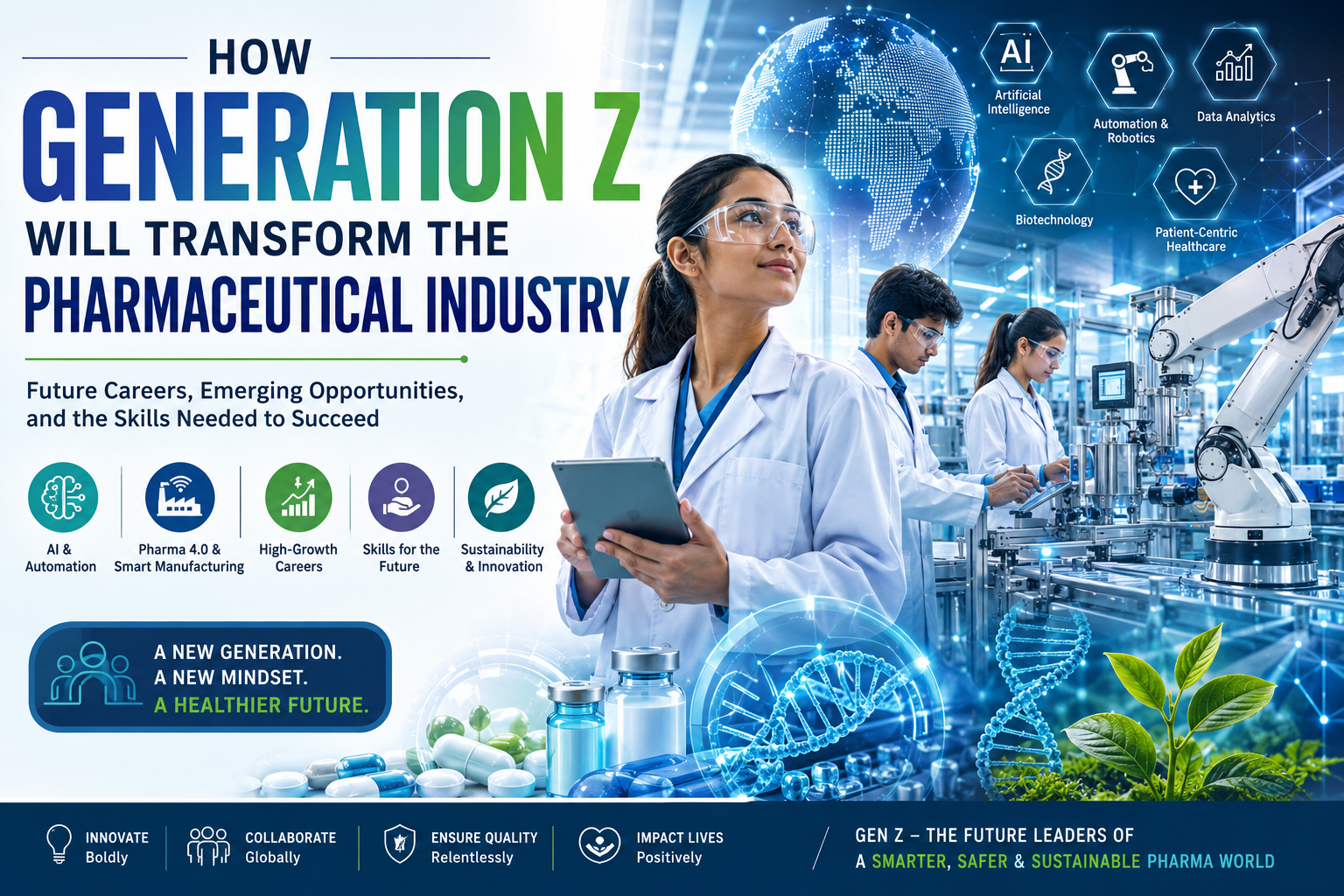
The pharmaceutical industry is entering one of the most transformative decades in its history. Rapid advances in Artificial Intelligence (AI), automation, robotics, biotechnology, digital health, personalized medicine, and Pharma 4.0 are reshaping how medicines are discovered, manufactured, tested, and delivered to patients worldwide.
At the center of this transformation is Generation Z (Gen Z)—individuals born roughly between 1997 and 2012. As millions of Gen Z professionals graduate and enter the workforce, they are bringing a unique blend of digital fluency, innovation, adaptability, and purpose-driven thinking that aligns perfectly with the future of pharmaceutical manufacturing and healthcare.
The next generation will not simply fill existing pharmaceutical roles—they will redefine them. Understanding the emerging opportunities and developing the right skills will be the key to building a successful career in this evolving industry.
Who is Generation Z?
Generation Z is the first truly digital-native generation. Unlike previous generations, they have grown up with smartphones, cloud computing, artificial intelligence, social media, and instant access to information.
Their workplace characteristics include:
- Strong digital and technology adoption
- Fast learning and adaptability
- Preference for innovation and automation
- Collaborative and global mindset
- Sustainability-focused decision making
- Entrepreneurial thinking
- Data-driven problem solving
- Continuous learning through online platforms
These qualities make Gen Z ideally positioned to lead the pharmaceutical industry’s digital transformation.
Why the Pharmaceutical Industry Needs Gen Z
The pharmaceutical industry is facing multiple challenges:
- Aging workforce
- Increasing regulatory complexity
- Rapid digital transformation
- Growing demand for biologics and personalized medicine
- Global supply chain challenges
- Rising patient expectations
- Increased focus on sustainability
To remain competitive, pharmaceutical companies require professionals who are comfortable working with digital technologies while maintaining the highest standards of quality and patient safety.
Gen Z brings exactly this combination.
Instead of viewing technology as a disruption, they naturally embrace it as an enabler of better healthcare outcomes.
How Pharma 4.0 is Changing Pharmaceutical Careers
The traditional pharmaceutical workforce focused heavily on manual processes and documentation. Today’s environment is becoming increasingly digital.
Key technologies transforming pharmaceutical jobs include:
- Artificial Intelligence (AI)
- Machine Learning
- Robotics
- Internet of Things (IoT)
- Digital Twins
- Manufacturing Execution Systems (MES)
- Electronic Batch Records (EBR)
- Digital Quality Management Systems (eQMS)
- Laboratory Information Management Systems (LIMS)
- Electronic Document Management Systems (eDMS)
- Predictive Analytics
- Cloud Computing
- Advanced Process Automation
As a result, many traditional roles are evolving into technology-enabled positions requiring both pharmaceutical knowledge and digital competencies.
High-Growth Career Opportunities for Gen Z
1. Pharmaceutical Manufacturing Careers
Modern manufacturing facilities increasingly use smart equipment, automation, and real-time analytics.
Career options include:
- Production Officer
- Manufacturing Engineer
- Process Engineer
- Manufacturing Excellence Specialist
- Continuous Improvement Engineer
- Pharma 4.0 Specialist
2. Quality Assurance Careers
Quality Assurance is becoming increasingly digital with automated documentation, AI-assisted investigations, and electronic quality systems.
Emerging roles include:
- Quality Assurance Executive
- Digital Quality Specialist
- Data Integrity Specialist
- GMP Compliance Expert
- Audit and Inspection Specialist
- Quality Systems Analyst
3. Quality Control Careers
Modern QC laboratories rely heavily on automation and digital technologies.
Opportunities include:
- QC Analyst
- Stability Scientist
- Analytical Development Scientist
- Laboratory Automation Specialist
- LIMS Administrator
4. Validation and CSV
As pharmaceutical systems become computerized, demand for validation professionals continues to rise.
Career opportunities include:
- Validation Engineer
- Computer System Validation (CSV) Specialist
- Equipment Qualification Engineer
- Process Validation Expert
- Cleaning Validation Specialist
5. Regulatory Affairs
Global regulations continue evolving alongside digital technologies.
Career options include:
- Regulatory Affairs Associate
- Regulatory Intelligence Specialist
- eCTD Publishing Expert
- Global Regulatory Manager
6. Pharmacovigilance
AI-assisted safety monitoring is revolutionizing drug safety.
Growing roles include:
- Drug Safety Associate
- Signal Detection Specialist
- Medical Reviewer
- Pharmacovigilance Scientist
7. Clinical Research
Digital clinical trials are creating new opportunities.
Emerging positions include:
- Clinical Research Associate
- Clinical Data Manager
- Clinical Trial Coordinator
- Real-World Evidence Analyst
8. Biotechnology, Gene Therapy and Cell Therapy
These sectors represent some of the fastest-growing areas in healthcare.
Career paths include:
- Bioprocess Engineer
- Cell Therapy Scientist
- Gene Therapy Specialist
- Biologics Manufacturing Expert
9. Digital Manufacturing and AI
One of the fastest-growing career segments.
Roles include:
- AI Engineer
- Manufacturing Data Analyst
- Digital Transformation Consultant
- Smart Factory Specialist
- MES Engineer
- Automation Engineer
10. Supply Chain and Serialization
Global supply chains are becoming increasingly connected.
Career opportunities include:
- Supply Chain Planner
- Serialization Specialist
- Track and Trace Expert
- Cold Chain Specialist
- Digital Logistics Manager
Essential Skills Gen Z Must Develop
Technical knowledge alone is no longer sufficient.
Successful pharmaceutical professionals will combine science with digital expertise.
Technical Skills
- Good Manufacturing Practices (GMP)
- Pharmaceutical Manufacturing
- Validation
- Regulatory Compliance
- Data Integrity
- Root Cause Analysis
- CAPA
- Risk Management
- Lean Manufacturing
- Six Sigma
- Process Optimization
Digital Skills
- Artificial Intelligence
- Data Analytics
- Power BI
- Python (basic understanding)
- SQL fundamentals
- MES
- LIMS
- eQMS
- CSV
- Digital Documentation
- Automation Systems
Soft Skills
- Leadership
- Communication
- Teamwork
- Critical Thinking
- Emotional Intelligence
- Problem Solving
- Decision Making
- Adaptability
- Innovation
- Project Management
Valuable Certifications
Professional certifications can significantly improve employability.
Recommended certifications include:
- GMP Training
- Good Documentation Practices (GDP)
- Six Sigma Green Belt
- Lean Manufacturing
- GAMP 5 Fundamentals
- Data Integrity
- Computer System Validation (CSV)
- Project Management
- ISO 9001 Internal Auditor
- Artificial Intelligence Fundamentals
- Data Analytics
- Power BI
- Pharmaceutical Regulatory Affairs
AI Will Transform Jobs—Not Eliminate Human Potential
Artificial Intelligence is often viewed with concern, but its impact in pharmaceuticals is more about changing work than replacing people.
AI can:
- Analyze manufacturing trends
- Predict equipment failures
- Review quality documents
- Detect deviations earlier
- Assist regulatory submissions
- Improve clinical trial recruitment
- Enhance pharmacovigilance signal detection
- Optimize production scheduling
However, AI cannot replace:
- Scientific judgment
- Ethical decision-making
- Leadership
- Innovation
- Human collaboration
- Regulatory interpretation
- Patient-focused thinking
Gen Z should therefore focus on becoming professionals who know how to work alongside AI, using it to increase productivity, improve decision-making, and solve complex problems.
Common Career Mistakes Young Professionals Should Avoid
Many graduates unintentionally slow their career growth.
Common mistakes include:
- Chasing salary instead of learning opportunities
- Ignoring GMP fundamentals
- Neglecting communication skills
- Avoiding documentation responsibilities
- Resisting continuous learning
- Overlooking networking and mentorship
- Depending entirely on AI without understanding the underlying science
- Failing to develop business and commercial awareness
A strong foundation built in the first few years often determines long-term career success.
Practical Career Tips for Fresh Graduates
To accelerate growth:
- Build strong GMP and pharmaceutical manufacturing knowledge.
- Learn AI tools that improve productivity and data analysis.
- Gain hands-on exposure through internships and industrial training.
- Develop expertise in digital quality systems and validation.
- Improve presentation and communication skills.
- Stay updated with regulatory guidelines.
- Create a professional LinkedIn profile and build a strong network.
- Read pharmaceutical journals and industry news regularly.
- Seek mentors who can guide your career development.
- Never stop learning.
Small, consistent improvements often lead to significant career progression over time.
Future Trends Shaping Pharmaceutical Jobs by 2030
Over the next decade, the pharmaceutical workforce will increasingly focus on:
- AI-assisted drug discovery
- Digital twins in manufacturing
- Smart factories
- Autonomous production systems
- Continuous manufacturing
- Personalized medicine
- Gene editing technologies
- Cell and gene therapies
- Sustainable pharmaceutical manufacturing
- Green chemistry
- Digital supply chains
- Blockchain-enabled serialization
- Predictive quality systems
- Remote audits
- Advanced robotics
- Digital therapeutics
- Precision healthcare
Professionals who embrace these technologies will be well positioned to lead the next generation of pharmaceutical innovation.
Continuous Learning: The Ultimate Career Advantage
The future pharmaceutical professional will not rely solely on a university degree. Success will come from continuous learning, curiosity, and adaptability.
Investing time in new technologies, regulatory updates, digital tools, leadership skills, and cross-functional knowledge will keep professionals relevant throughout their careers.
Learning is no longer a one-time achievement—it is a lifelong commitment.
Conclusion
Generation Z is poised to become the driving force behind the pharmaceutical industry’s next era of innovation. With their digital mindset, adaptability, creativity, and passion for meaningful work, they are uniquely equipped to accelerate the adoption of AI, Pharma 4.0, biotechnology, digital health, and sustainable manufacturing.
The future belongs to professionals who combine scientific expertise with digital intelligence, ethical leadership, and a commitment to continuous improvement. By embracing lifelong learning, mastering emerging technologies, and keeping patient safety and product quality at the center of every decision, Gen Z can shape a pharmaceutical industry that is smarter, more resilient, and more accessible.
For aspiring professionals, this is more than a career opportunity—it is a chance to make a lasting impact on global health. The medicines of tomorrow will be developed, manufactured, and delivered by a workforce that values innovation, collaboration, quality, and sustainability. Generation Z has the potential not only to join this transformation but to lead it—becoming the innovators, problem-solvers, and leaders who improve millions of lives around the world.
About the Author
Ramesh Palav is a pharmaceutical professional with 21+ years of experience in manufacturing, qualification, validation, CSV, GMP, and quality compliance. He shares practical industry insights on pharmaceutical manufacturing, GxP compliance, digital transformation, and Pharma 4.0 through Pharma Manufacturing Hub
Pingback: How to Build a Successful Government Career After B.Pharm.