
Last reviewed: September 2026
Ozempic, Wegovy and Mounjaro have become some of the most discussed medicines in diabetes and obesity care. They are often grouped together as “GLP-1 drugs,” but that description hides important differences.
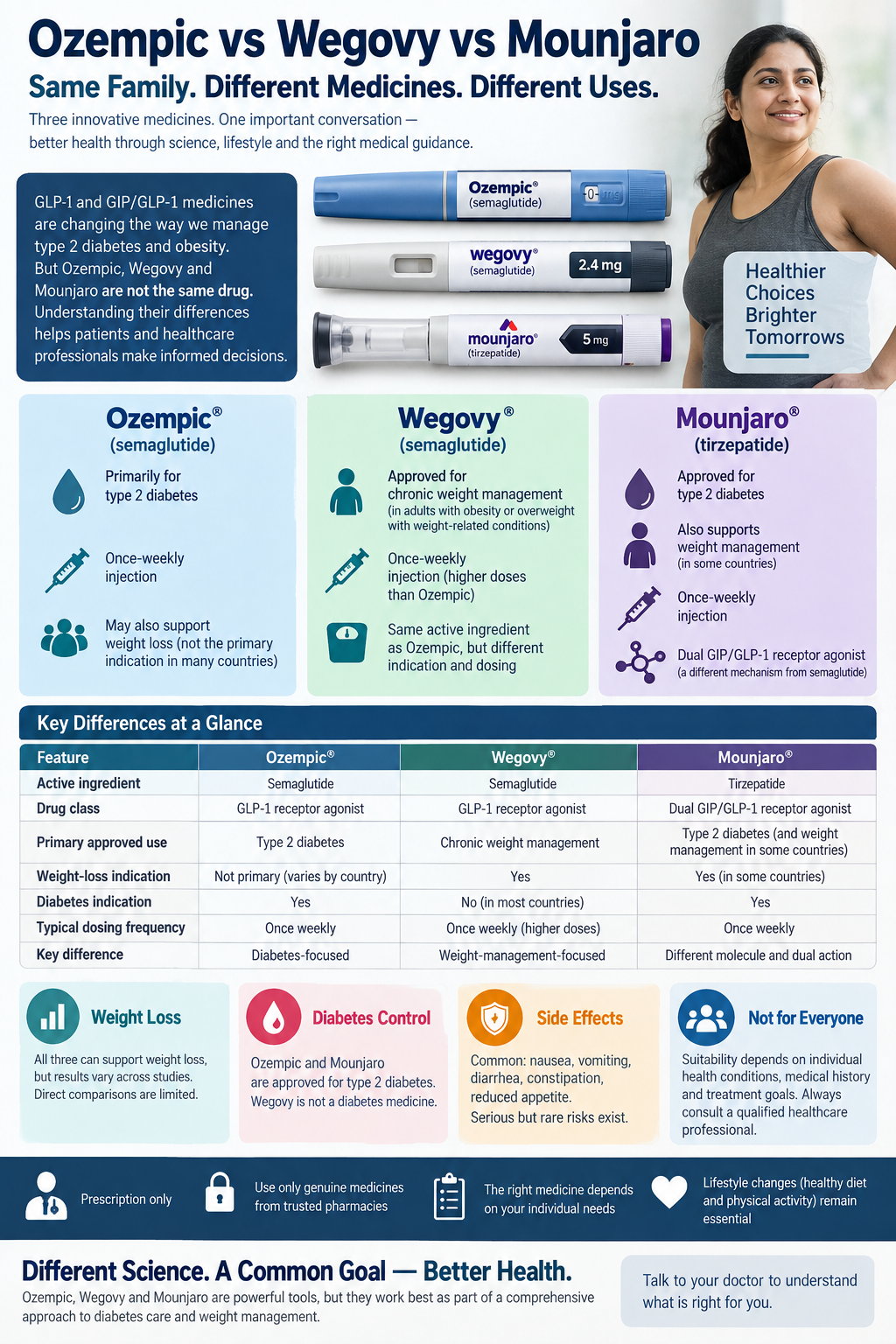
Ozempic and Wegovy contain the same active ingredient—semaglutide—while Mounjaro contains tirzepatide, which activates both GIP and GLP-1 receptors. Their approved indications, doses, clinical evidence, product positioning and regulatory status are not identical.
The distinction matters because a medicine approved for type 2 diabetes is not automatically interchangeable with a medicine specifically approved for chronic weight management. Regulatory approvals can also differ between countries.
This article provides a practical comparison of Ozempic vs Wegovy vs Mounjaro, with particular attention to clinical evidence and the Indian pharmaceutical market. It is intended for education and should not replace advice from a qualified healthcare professional.
Ozempic vs Wegovy vs Mounjaro at a Glance
The simplest way to understand the three medicines is:
- Ozempic: semaglutide; a GLP-1 receptor agonist primarily positioned for type 2 diabetes in the U.S. labeling.
- Wegovy: semaglutide; the same molecule as Ozempic but positioned and labeled for chronic weight management, with additional indications in some jurisdictions.
- Mounjaro: tirzepatide; a dual GIP/GLP-1 receptor agonist used for type 2 diabetes and, in several jurisdictions including the EU, chronic weight management.
In the United States, the product labels distinguish the brands and indications. The FDA’s current Ozempic information includes type 2 diabetes, cardiovascular-risk reduction in specified adults with type 2 diabetes and established cardiovascular disease, and kidney-related risk reduction in specified adults with type 2 diabetes and chronic kidney disease.
Wegovy’s U.S. labeling includes chronic weight management and cardiovascular-risk reduction in an indicated population, while its current label also includes an indication for noncirrhotic MASH with moderate-to-advanced fibrosis.
Mounjaro contains tirzepatide and acts at both GIP and GLP-1 receptors. The European Medicines Agency currently lists Mounjaro for type 2 diabetes and chronic weight management in specified adults.
What Are Ozempic, Wegovy and Mounjaro?
Ozempic: Semaglutide for Diabetes
Ozempic contains semaglutide, a long-acting GLP-1 receptor agonist.
GLP-1 is a naturally occurring gut hormone involved in glucose regulation and appetite. GLP-1 receptor agonism can increase glucose-dependent insulin secretion, reduce inappropriate glucagon secretion, slow gastric emptying and influence appetite.
Ozempic is administered by subcutaneous injection once weekly. In the current U.S. regulatory framework, its principal indication is improving glycemic control in adults with type 2 diabetes, with additional cardiovascular and kidney-risk indications for specified populations.
An important practical point is that Ozempic should not simply be regarded as a generic “weight-loss injection.” Weight reduction can occur during treatment, but the approved indication depends on the specific product label and country.
Wegovy: Semaglutide for Chronic Weight Management
Wegovy also contains semaglutide.
That creates one of the most common misconceptions in the GLP-1 market: if Ozempic and Wegovy contain the same molecule, why are they different products?
The answer is primarily product development, dosing, indication and regulatory labeling.
Wegovy was developed and labeled specifically around chronic weight management. In the EU, it is indicated alongside reduced-calorie diet and increased physical activity for adults with obesity or adults with overweight plus specified weight-related comorbidities.
In the U.S., Wegovy is also indicated for chronic weight management and has an indication to reduce major cardiovascular events in specified adults with cardiovascular disease and overweight or obesity.
So while Ozempic and Wegovy share semaglutide, they should not be treated as automatically interchangeable.
Mounjaro: Tirzepatide and Dual GIP/GLP-1 Action
Mounjaro contains tirzepatide.
Unlike semaglutide, tirzepatide is a dual GIP/GLP-1 receptor agonist.
It therefore interacts with two incretin pathways rather than primarily one.
The European Medicines Agency explains that tirzepatide acts at receptors for both GIP and GLP-1, helping increase insulin secretion in response to food and supporting glucose control while also reducing appetite and helping with weight management.
This dual mechanism is one of the major scientific differences between Mounjaro and semaglutide products.
Ozempic vs Wegovy vs Mounjaro: Detailed Comparison
| Feature | Ozempic | Wegovy | Mounjaro |
|---|---|---|---|
| Active ingredient | Semaglutide | Semaglutide | Tirzepatide |
| Main pharmacological class | GLP-1 receptor agonist | GLP-1 receptor agonist | GIP/GLP-1 receptor agonist |
| Molecule | Semaglutide | Semaglutide | Tirzepatide |
| Primary positioning | Type 2 diabetes | Chronic weight management | Type 2 diabetes; weight management in jurisdictions where approved |
| Weight reduction | Common treatment effect | Core therapeutic objective | Major therapeutic objective where approved |
| Administration | Subcutaneous injection | Subcutaneous injection; oral formulation now exists in some jurisdictions | Subcutaneous injection |
| Frequency | Generally once weekly | Once weekly for injection | Once weekly |
| Appetite effect | Yes | Yes | Yes |
| Glucose lowering | Yes | Yes | Yes |
| GIP receptor activity | No | No | Yes |
| GLP-1 receptor activity | Yes | Yes | Yes |
| GI adverse effects | Common | Common | Common |
| Major safety considerations | Product-label dependent | Product-label dependent | Product-label dependent |
| Can be substituted independently? | No | No | No |
Regulatory indications, formulations and available doses vary by country and may change. The table is intended as a high-level educational comparison rather than prescribing guidance.
How Do GLP-1 and GIP Medicines Work?
To understand semaglutide vs tirzepatide, it helps to understand incretin biology.
After eating, the gastrointestinal tract releases hormones including GLP-1 and GIP.
These hormones help the body respond appropriately to nutrients.
GLP-1
GLP-1 receptor activation can:
- increase glucose-dependent insulin secretion
- suppress glucagon when glucose levels are elevated
- slow gastric emptying
- increase feelings of fullness
- reduce appetite and food intake
Semaglutide mimics the activity of GLP-1 at its receptor.
GIP
GIP—glucose-dependent insulinotropic polypeptide—is another incretin hormone.
Tirzepatide activates both:
GIP receptor + GLP-1 receptor
This dual activity is believed to contribute to its effects on glucose metabolism, appetite and body weight.
The important distinction is therefore:
Ozempic/Wegovy → GLP-1 receptor agonism
Mounjaro → GIP + GLP-1 receptor agonism
That difference does not automatically mean one medicine is appropriate for every patient. Clinical selection depends on the indication, patient characteristics, contraindications, tolerability, access and local regulatory labeling.
Wegovy vs Ozempic: Why Are They Different If Both Contain Semaglutide?
This is probably the most frequently misunderstood aspect of the comparison.
Think of it this way:
Same active molecule does not necessarily mean same product, same indication or same dosing regimen.
Ozempic and Wegovy both contain semaglutide, but they were developed and labeled for different therapeutic purposes.
The U.S. FDA specifically notes that Wegovy contains semaglutide and should not be combined with other semaglutide-containing products or other GLP-1 receptor agonists.
Wegovy’s weight-management indication uses a higher semaglutide exposure than the traditional Ozempic diabetes regimen.
The practical consequence is important:
Patients should not independently switch between Ozempic and Wegovy simply because both contain semaglutide.
A physician or other authorized prescriber should determine the appropriate product and regimen.
Wegovy vs Mounjaro: Which Is More Effective for Weight Loss?
This question requires more care than simply comparing numbers from different clinical trials.
Earlier clinical trials established substantial weight-loss efficacy for both semaglutide and tirzepatide.
In the STEP 1 trial, adults with overweight or obesity but without diabetes receiving once-weekly semaglutide 2.4 mg plus lifestyle intervention experienced substantial weight reduction over 68 weeks.
In SURMOUNT-1, tirzepatide produced dose-dependent weight reductions over 72 weeks in adults with obesity or overweight and a weight-related complication who did not have diabetes. Mean weight changes were approximately −15.0%, −19.5% and −20.9% with 5 mg, 10 mg and 15 mg tirzepatide respectively, compared with approximately −3.1% with placebo.
But these were separate trials.
That means comparing the headline percentages directly can be misleading because the studies differed in:
- participants
- baseline characteristics
- trial design
- treatment duration
- dose
- lifestyle intervention
- statistical methods
- inclusion and exclusion criteria
The Important New Head-to-Head Evidence
A major development came from SURMOUNT-5, published in the New England Journal of Medicine in 2025.
This randomized phase 3b trial directly compared tirzepatide with semaglutide in adults with obesity who did not have type 2 diabetes.
At week 72:
- tirzepatide: −20.2% mean weight change
- semaglutide: −13.7% mean weight change
The difference favored tirzepatide and was statistically significant. Tirzepatide also produced a greater reduction in waist circumference. Gastrointestinal adverse events were the most common in both groups and were generally mild to moderate, particularly around dose escalation.
This is stronger evidence than comparing unrelated trials because the medicines were evaluated directly within the same study.
However, the result still does not mean Mounjaro is automatically the right treatment for every patient.
Clinical effectiveness is only one part of treatment selection.
Ozempic vs Mounjaro for Diabetes
The diabetes comparison is also supported by direct clinical evidence.
In the SURPASS-2 trial, tirzepatide was compared with semaglutide in adults with type 2 diabetes. Tirzepatide produced greater reductions in HbA1c and body weight than once-weekly semaglutide 1 mg under the conditions of that study. At 40 weeks, mean weight reductions were approximately 7.6 kg, 9.3 kg and 11.2 kg with tirzepatide 5 mg, 10 mg and 15 mg respectively, compared with 5.7 kg with semaglutide.
This is useful evidence, but it is important to recognize the exact comparison: the study compared tirzepatide with semaglutide 1 mg, not necessarily with every possible semaglutide regimen used in obesity management.
That distinction matters when interpreting headlines about Ozempic vs Mounjaro.
Diabetes Control: What Do These Medicines Do?
Both semaglutide and tirzepatide can improve glycemic control.
They may lower:
- HbA1c
- fasting glucose
- postprandial glucose
They can also reduce body weight and influence appetite.
Tirzepatide’s dual GIP/GLP-1 activity can produce substantial glucose-lowering effects. The EMA reports significant HbA1c reductions across several Mounjaro studies in type 2 diabetes.
The clinical goal, however, should not be reduced to achieving the lowest possible HbA1c or the largest possible weight reduction.
Treatment decisions need to consider the whole patient, including:
- hypoglycemia risk
- renal function
- cardiovascular disease
- concurrent medicines
- gastrointestinal tolerance
- treatment adherence
- nutritional status
- treatment objectives
Side Effects of Ozempic, Wegovy and Mounjaro
The most recognizable adverse effects across these therapies are gastrointestinal.
Common effects include:
- nausea
- vomiting
- diarrhea
- constipation
- abdominal discomfort or pain
- decreased appetite
- indigestion or related gastrointestinal symptoms
These effects are often most noticeable when treatment is initiated or the dose is increased.
The EMA describes gastrointestinal effects as the most common adverse effects with Mounjaro and notes that they are generally mild to moderate and more frequent shortly after dose increases.
Wegovy’s product information similarly identifies nausea, diarrhea, vomiting, constipation and abdominal pain among its common adverse reactions.
Important Safety Issues
Pancreatitis
Acute pancreatitis has been reported with GLP-1-based medicines. Patients with symptoms suggestive of pancreatitis require medical evaluation.
Gallbladder disease
Gallstones and other gallbladder-related events can occur and may require investigation when clinically suspected.
Dehydration and kidney injury
Severe vomiting or diarrhea can result in dehydration and, in susceptible patients, acute kidney injury. Current Wegovy U.S. labeling specifically includes acute kidney injury due to volume depletion among its warnings.
Hypoglycemia
GLP-1-based medicines generally have a lower intrinsic risk of hypoglycemia than insulin or sulfonylureas when used alone.
However, the risk can increase when they are combined with insulin or insulin-secretagogue medicines.
Thyroid C-cell tumor warning
U.S. labeling for Wegovy contains a boxed warning based on thyroid C-cell tumors observed in rodents and contraindicates use in people with a personal or family history of medullary thyroid carcinoma or MEN2.
The exact wording and regulatory treatment of warnings should always be checked against the current local product label.
Diabetic retinopathy
Rapid improvement in glycemic control can be associated with changes in diabetic retinopathy in susceptible patients. This is particularly relevant to people with pre-existing diabetic eye disease.
Pregnancy
Weight-loss treatment is not appropriate during pregnancy, and semaglutide labeling contains specific pregnancy-related precautions. Because semaglutide has a long elimination half-life, the U.S. Wegovy label recommends discontinuation at least two months before a planned pregnancy for specified indications.
Anesthesia and procedures
GLP-1-based medicines can delay gastric emptying. Current product labeling includes warnings regarding pulmonary aspiration during general anesthesia or deep sedation. Patients should inform their healthcare team about these medicines before planned procedures.
Who May Be Considered for Treatment?
These medicines are not simply cosmetic weight-loss products.
For chronic weight management, regulatory criteria commonly involve obesity or overweight accompanied by weight-related health problems.
For example, the EMA’s Wegovy indication covers adults with:
- BMI ≥30 kg/m², or
- BMI ≥27 kg/m² with at least one weight-related comorbidity.
Mounjaro has comparable BMI-based weight-management criteria in the EU.
But BMI is only one part of clinical assessment.
A healthcare professional may also consider:
- type 2 diabetes
- hypertension
- dyslipidemia
- cardiovascular disease
- obstructive sleep apnea
- kidney disease
- gastrointestinal conditions
- other medicines
- previous weight-management attempts
- pregnancy status
- treatment goals
- affordability and access
Can Ozempic and Wegovy Be Used Interchangeably?
Not automatically.
Although both contain semaglutide, they are different branded products with different regulatory labeling and dosing frameworks.
Similarly, neither Ozempic nor Wegovy should be combined with another semaglutide product unless specifically directed within an appropriate medical context.
The FDA explicitly states that Wegovy should not be co administered with other semaglutide-containing products or other GLP-1 receptor agonists.
Self-switching or combining products can lead to inappropriate cumulative exposure and increased adverse effects.
Ozempic vs Wegovy vs Mounjaro: What About Cardiovascular Benefits?
The cardiovascular discussion is increasingly important because incretin medicines are being evaluated not only for glucose and weight outcomes but also for major clinical outcomes.
Wegovy received an FDA indication in 2024 to reduce the risk of cardiovascular death, nonfatal myocardial infarction and nonfatal stroke in adults with established cardiovascular disease and overweight or obesity. In the supporting trial, major adverse cardiovascular events occurred in 6.5% of participants receiving Wegovy versus 8.0% receiving placebo.
Ozempic also has cardiovascular-risk and kidney-related indications for specified adults with type 2 diabetes in current U.S. labeling.
For Mounjaro, cardiovascular evidence continues to develop. This is an area where readers should distinguish between completed outcomes trials, regulatory indications and company-reported topline findings.
For example, Lilly reported 2025 topline results from SURPASS-CVOT showing tirzepatide was non-inferior to dulaglutide for a cardiovascular endpoint in people with type 2 diabetes and established cardiovascular disease.
The broader lesson is that cardiovascular evidence is product- and population-specific. It should not be reduced to the statement that every GLP-1/GIP medicine has identical cardiovascular benefits.
Cost and Access in India
The Indian market has changed rapidly.
Mounjaro was launched in India in March 2025 after CDSCO approval, initially with 2.5 mg and 5 mg presentations reported at ₹3,500 and ₹4,375 respectively.
Semaglutide competition has subsequently expanded significantly. CDSCO’s public database now shows multiple semaglutide finished formulations with approvals for type 2 diabetes and/or chronic weight management, depending on the specific product.
There has also been significant price movement.
As of September 2026, currently listed Indian MRPs reported by major online pharmacy sources include approximately:
| Product | Example strength | Approx. listed MRP |
|---|---|---|
| Ozempic | 0.25 mg | ₹5,660 |
| Ozempic | 0.5 mg | ₹8,100 |
| Ozempic | 1 mg | ₹9,100 |
| Wegovy | 0.25 mg | ₹5,660 |
| Wegovy | 1 mg | ₹9,100 |
| Wegovy | 2.4 mg | ₹16,400 |
| Mounjaro | 2.5 mg single-dose vial | ₹3,281 |
| Mounjaro | 5 mg single-dose vial | ₹4,102 |
| Mounjaro | 5 mg KwikPen | ₹16,406 |
| Mounjaro | 15 mg KwikPen | ₹25,781 |
These are reference MRPs, not universal selling prices, and should be rechecked before publication or purchase because pricing and pack configurations can change.
Reuters reported that Novo Nordisk reduced Indian prices of Ozempic and Wegovy in 2026 following increasing competition after the semaglutide patent expiry in India.
For pharmaceutical professionals, this development is particularly significant because it illustrates how intellectual-property expiry, domestic manufacturing capability and competition can rapidly alter the economics of high-value metabolic medicines.
The Indian Pharmaceutical Industry: Why GLP-1 Medicines Matter
The emergence of semaglutide and tirzepatide is more than a change in obesity treatment.
It represents a significant shift in pharmaceutical strategy.
Manufacturing
GLP-1/GIP therapies create opportunities and challenges across:
- peptide manufacturing
- sterile manufacturing
- fill-finish operations
- injectable-device technology
- cold-chain logistics
- analytical testing
- process validation
- combination-product quality systems
Device Technology
Modern injectable incretin products increasingly depend on sophisticated delivery systems such as:
- prefilled pens
- multidose pens
- autoinjector-type systems
- single-dose presentations
Consequently, pharmaceutical quality considerations extend beyond the drug substance and formulation to container-closure systems, dose accuracy, device functionality and human factors.
Supply Chain
Because these medicines generally require controlled storage conditions, manufacturers, distributors and pharmacies need appropriate temperature management.
Maintaining product integrity across:
manufacturer → warehouse → distributor → pharmacy → patient
is an important operational consideration.
Pharmacovigilance
The expanding use of GLP-1/GIP medicines also increases the importance of:
- adverse-event reporting
- medication-error surveillance
- counterfeit detection
- product-quality complaints
- misuse monitoring
- risk-management plans
- post-marketing safety surveillance
For Indian pharmaceutical companies entering this space, regulatory compliance and pharmacovigilance will be as important as commercial opportunity.
Current Research and Future Directions
The incretin field is moving rapidly.
Research is expanding beyond conventional injectable GLP-1 therapy toward:
- oral GLP-1 medicines
- next-generation incretin agonists
- dual and triple agonists
- combination therapies
- cardiovascular indications
- kidney outcomes
- metabolic liver disease
- obstructive sleep apnea
- long-term obesity management
- preservation of lean mass
- maintenance strategies after weight loss
The regulatory landscape is evolving as well.
For example, the EMA’s current Wegovy record includes an oral semaglutide formulation for weight management in adults, reflecting how quickly the field is moving beyond traditional injectable therapy.
Lilly has also identified oral incretin development and next-generation molecules as major parts of its pipeline.
For pharmaceutical companies, the next competitive phase is therefore unlikely to be simply about producing another GLP-1 product. Differentiation may increasingly involve:
- oral delivery
- tolerability
- dosing convenience
- combination mechanisms
- manufacturing efficiency
- device innovation
- long-term outcomes
- affordability
What Happens When Treatment Stops?
One of the most important issues in obesity pharmacotherapy is the long-term nature of treatment.
Obesity is increasingly treated as a chronic disease rather than a short-term condition.
When effective pharmacological treatment is discontinued, biological mechanisms that promote appetite and weight regain may re-emerge. Therefore, treatment discontinuation should not be approached as simply completing a short course of medicine.
Patients should discuss long-term management with their healthcare professional.
This includes:
- nutrition
- physical activity
- sleep
- behavioral support
- management of metabolic disease
- maintenance treatment where appropriate
- monitoring for weight regain
The goal should be sustainable health improvement rather than a temporary number on the weighing scale.
Common Myths: Ozempic vs Wegovy vs Mounjaro
| Myth | Fact |
|---|---|
| Ozempic, Wegovy and Mounjaro are the same medicine. | No. Ozempic and Wegovy contain semaglutide; Mounjaro contains tirzepatide. |
| Ozempic is simply a weight-loss injection. | Ozempic’s approved indication depends on the jurisdiction; in the U.S. it is primarily a type 2 diabetes product with additional specified indications. |
| Wegovy and Ozempic can always be substituted. | They contain the same molecule but have different labeling and dosing frameworks. |
| Mounjaro is just another GLP-1 drug. | Tirzepatide activates both GIP and GLP-1 receptors. |
| More dose always means better treatment. | Higher doses may increase efficacy for some endpoints but can also increase adverse effects and may not be appropriate for every patient. |
| These medicines replace diet and exercise. | They are generally used as part of a broader treatment strategy. |
| Everyone who wants to lose weight should take one. | Treatment depends on clinical eligibility, risks, benefits and professional assessment. |
| They have no serious risks. | Important warnings and adverse events exist, even though many adverse effects are manageable. |
| Weight loss automatically continues after stopping. | Weight regain can occur, making long-term management important. |
Which One Is Better?
There is no scientifically responsible answer that says one of Ozempic, Wegovy or Mounjaro is universally the best medicine.
Instead, the more useful question is:
Which treatment has the most appropriate benefit-risk profile for this particular indication and patient?
A clinician may consider:
| Clinical question | Why it matters |
|---|---|
| Does the patient have type 2 diabetes? | Determines treatment objectives and eligible therapies |
| Is chronic weight management the primary goal? | Influences product selection and regulatory indication |
| What is the patient’s BMI and metabolic risk? | Helps establish clinical eligibility |
| Are there cardiovascular conditions? | May influence treatment choice |
| Are there kidney-related considerations? | Important for overall risk assessment |
| What other medicines are being taken? | Drug interactions and hypoglycemia risk may matter |
| How well is GI therapy tolerated? | Tolerability strongly affects adherence |
| What products are approved locally? | Regulatory approval varies by country |
| What is affordable and consistently available? | Long-term adherence depends partly on access |
| What does the treating clinician recommend? | Individual risk-benefit assessment is essential |
Therefore, Ozempic vs Wegovy vs Mounjaro is not a simple competition.
They are different therapeutic products occupying overlapping but distinct clinical spaces.
Frequently Asked Questions
1. What is the main difference between Ozempic, Wegovy and Mounjaro?
Ozempic and Wegovy contain semaglutide, a GLP-1 receptor agonist. Mounjaro contains tirzepatide, a dual GIP/GLP-1 receptor agonist. Their approved indications and dosing frameworks differ.
2. Is Ozempic the same as Wegovy?
They contain the same active ingredient, semaglutide, but they are different branded products with different regulatory indications and dosing frameworks.
3. Which contains semaglutide?
Both Ozempic and Wegovy contain semaglutide.
4. Is Mounjaro a GLP-1 medicine?
Mounjaro is more accurately described as a dual GIP/GLP-1 receptor agonist because tirzepatide activates both receptors.
5. Which is more effective for weight loss?
The 2025 SURMOUNT-5 head-to-head trial found greater average weight loss with tirzepatide than semaglutide over 72 weeks in adults with obesity without type 2 diabetes. However, individual treatment decisions should not be based on this result alone.
6. Can Ozempic and Wegovy be used interchangeably?
Not automatically. The fact that they contain the same active ingredient does not make them interchangeable without appropriate clinical and regulatory consideration.
7. Are these medicines approved for diabetes, obesity, or both?
It depends on the product and country. Ozempic is primarily positioned for type 2 diabetes in the U.S.; Wegovy is positioned around chronic weight management; Mounjaro has diabetes and weight-management indications in several jurisdictions. Always check the current local label.
8. What are the most common side effects?
Gastrointestinal effects are common, including nausea, vomiting, diarrhea, constipation and abdominal discomfort. They frequently occur during treatment initiation or dose escalation.
9. Can weight return after stopping treatment?
Yes. Weight regain can occur after discontinuation, which is why obesity treatment needs to be considered within a long-term disease-management strategy.
10. Are these medicines available in India?
Yes. Ozempic, Wegovy and Mounjaro are now part of India’s rapidly evolving incretin market, although exact availability, indications, presentations and pricing can change. CDSCO records also show increasing approvals for semaglutide products.
11. Do these medicines require a prescription?
They are prescription medicines and should be used under appropriate medical supervision.
12. Can people without diabetes use them for weight management?
Some semaglutide and tirzepatide products have regulatory indications for chronic weight management in people without diabetes who meet specified criteria. The appropriate product and indication depend on the applicable country’s label.
Conclusion: Ozempic vs Wegovy vs Mounjaro
The debate around Ozempic vs Wegovy vs Mounjaro is often presented as a simple question of which injection produces the greatest weight loss.
The science is more nuanced.
Ozempic and Wegovy contain semaglutide, but their product positioning and approved indications differ. Mounjaro contains tirzepatide, which acts through both GIP and GLP-1 receptors.
Clinical evidence shows that both semaglutide and tirzepatide can produce clinically meaningful improvements in body weight and metabolic health. The 2025 SURMOUNT-5 trial provides direct evidence that tirzepatide produced greater average weight loss than semaglutide in a specific population of adults with obesity without diabetes.
But efficacy is only one component of a treatment decision.
The appropriate medicine depends on the indication, diabetes and obesity status, cardiovascular and metabolic risk, contraindications, tolerability, concurrent medications, affordability, availability and local regulatory approval.
For Indian healthcare and pharmaceutical professionals, these medicines also represent a much larger transformation: the convergence of obesity medicine, diabetes care, peptide manufacturing, injectable-device technology, regulatory science, pharmacovigilance and pharmaceutical-market competition.
The next phase of the GLP-1/GIP revolution will therefore not be defined solely by which drug produces the largest percentage of weight loss. It will increasingly be about long-term outcomes, safety, accessibility, convenience, manufacturing capacity and sustainable patient care.
Medical Disclaimer
This article is intended for general educational and pharmaceutical-industry information only. It does not constitute medical advice, diagnosis or a recommendation to start, stop, switch or combine any medicine. Approved indications, formulations, dosing recommendations, contraindications and safety information may differ by country and may change over time. Patients should consult a qualified healthcare professional and refer to the current approved local product information before making treatment decisions.
References
- FDA – Ozempic regulatory information
- FDA – Wegovy prescribing information
- EMA – Wegovy EPAR
- EMA – Mounjaro EPAR
- CDSCO – Indian drug approvals database
- NEJM – SURMOUNT-5 tirzepatide vs semaglutide
- NEJM – STEP 1 semaglutide obesity trial
- NEJM – SURMOUNT-1 tirzepatide obesity trial
- NEJM – SURPASS-2 tirzepatide vs semaglutide in type 2 diabetes
About the Author
Ramesh Palav is a pharmaceutical industry professional with experience in manufacturing, operations, GMP compliance, validation and pharmaceutical technology. He writes practical, evidence-based articles on emerging medicines, pharmaceutical manufacturing, quality, regulatory developments and healthcare innovations.