
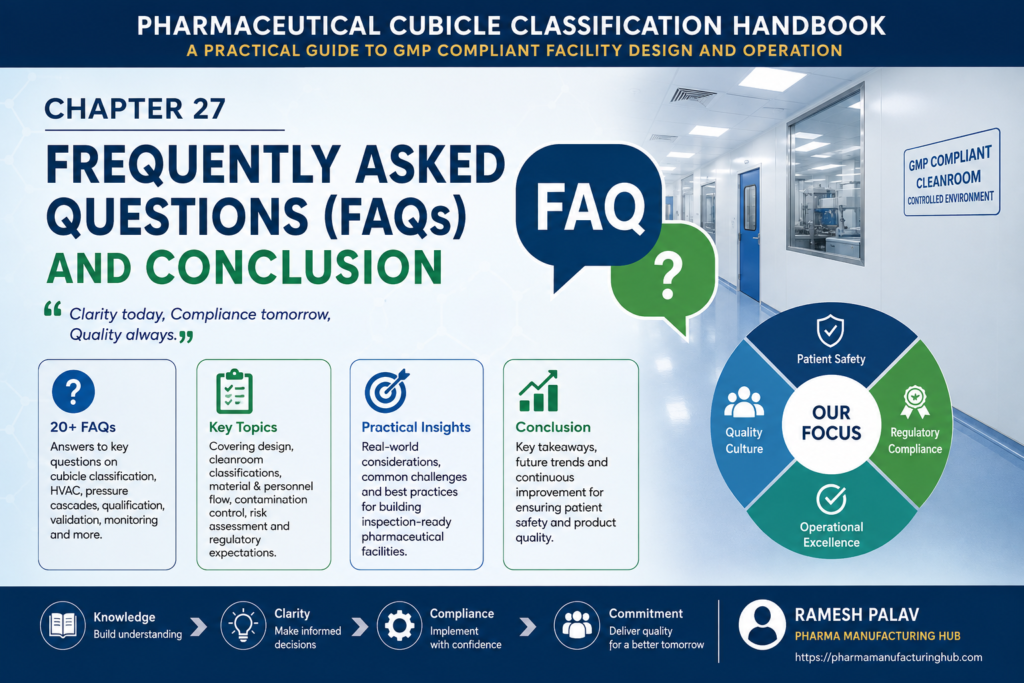
Handbook on Cubicle Classification and Facility Design.(FAQs)
Chapter 27-Frequently Asked Questions (FAQs) and Conclusion 27.1 Introduction Throughout this handbook, we have explored every major aspect of Pharmaceutical
Chapter 27-Frequently Asked Questions (FAQs) and Conclusion 27.1 Introduction Throughout this handbook, we have explored every major aspect of Pharmaceutical
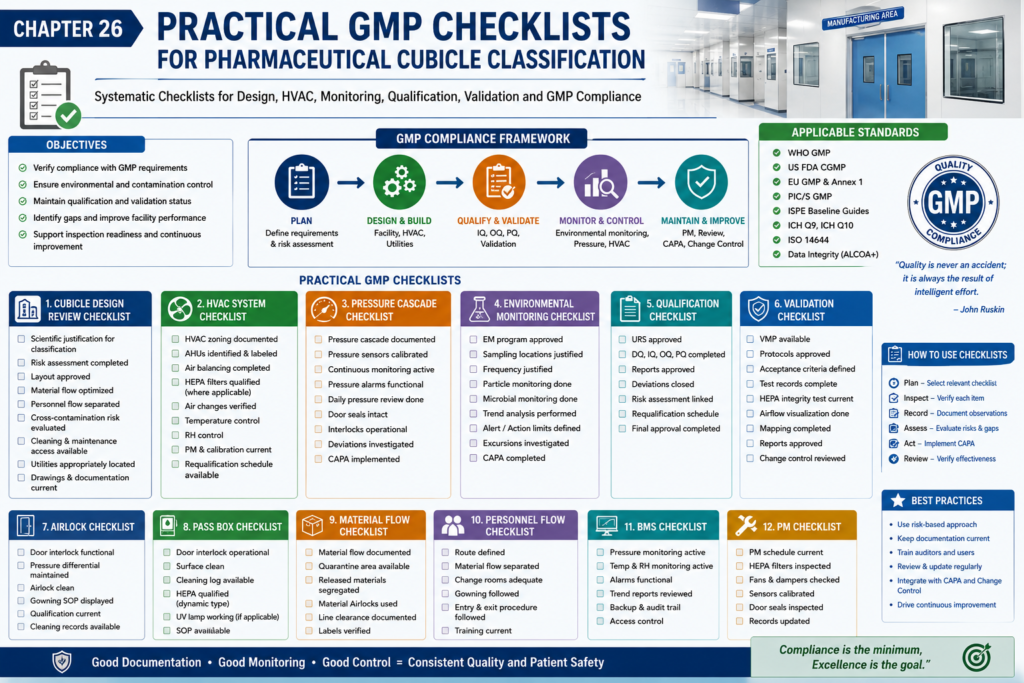
26.1 Introduction A well-designed pharmaceutical facility can only maintain compliance if it is routinely assessed using structured and documented GMP
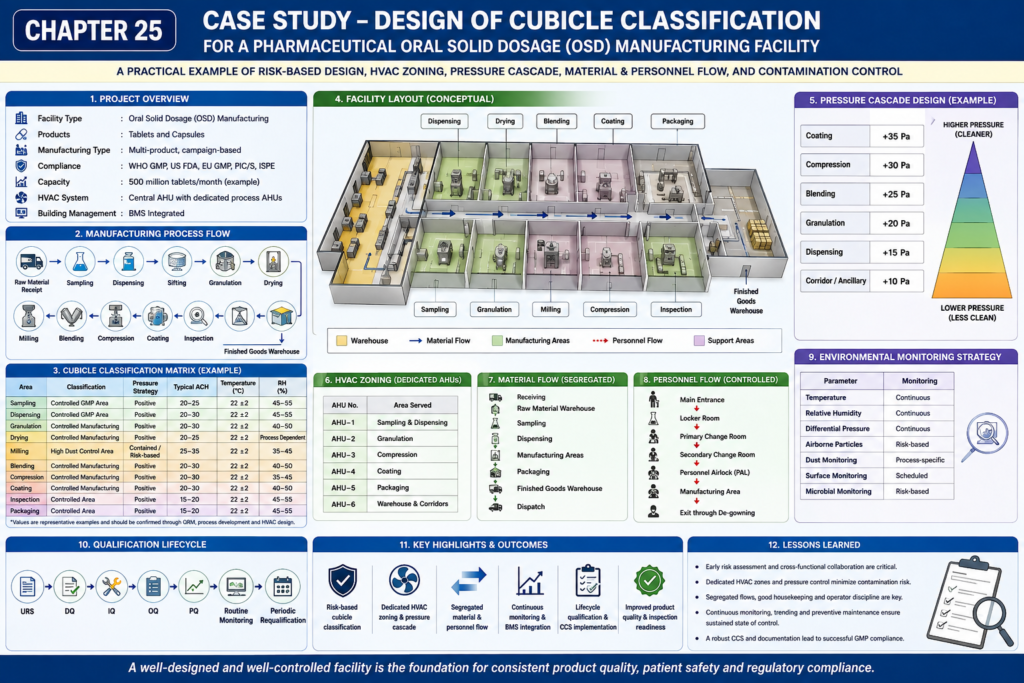
Chapter 25 25.1 Introduction The concepts discussed in the previous chapters become most valuable when applied to a practical facility
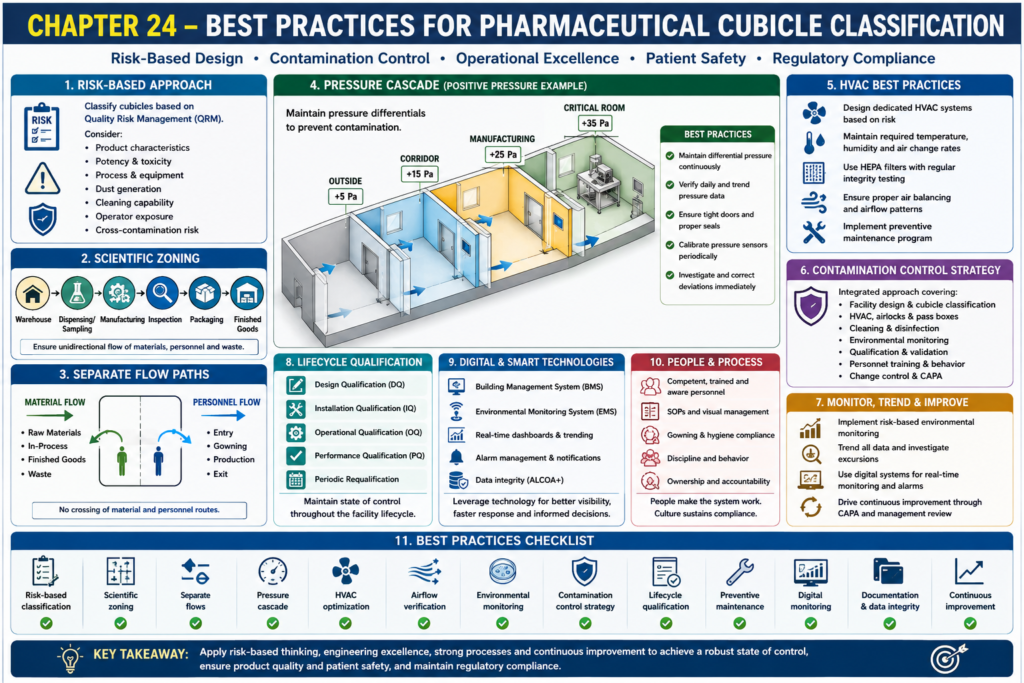
24.1 Introduction Pharmaceutical cubicle classification is a critical engineering and quality function that directly influences product quality, patient safety, contamination
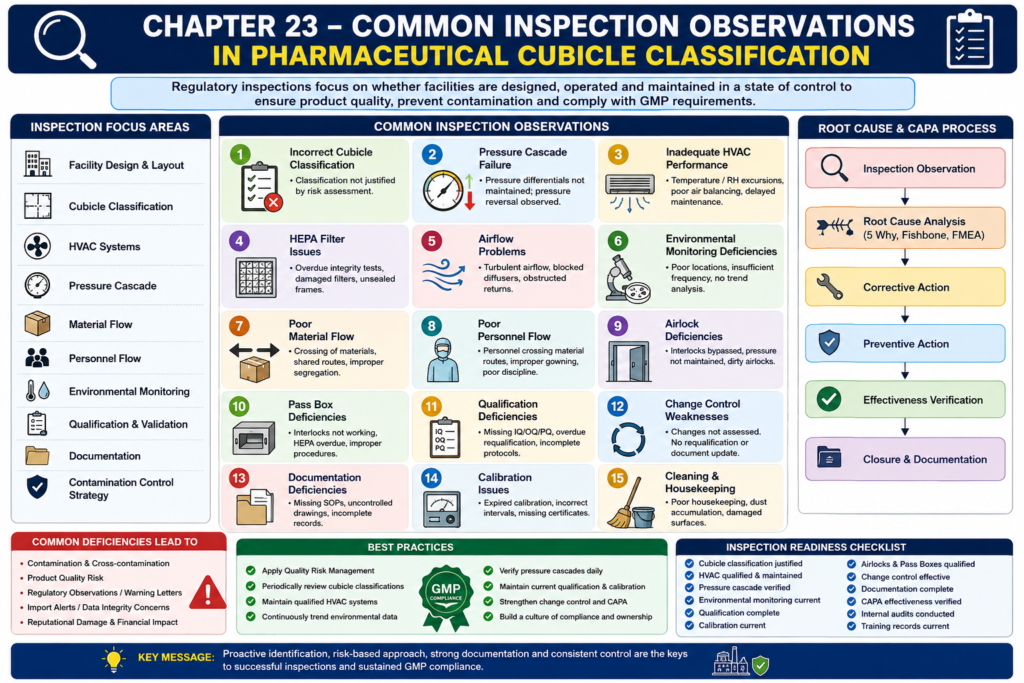
23.1 Introduction Pharmaceutical regulatory inspections evaluate whether manufacturing facilities consistently operate in a state of control that protects product quality
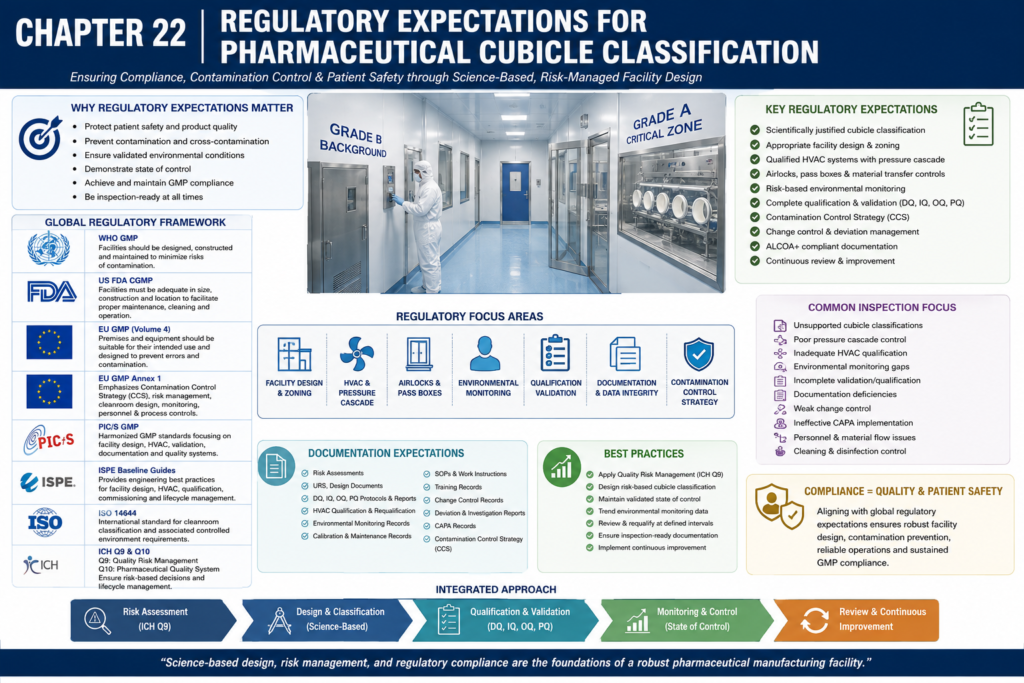
22.1 Introduction Pharmaceutical cubicle classification is not merely an engineering exercise—it is a regulatory expectation that directly impacts product quality,
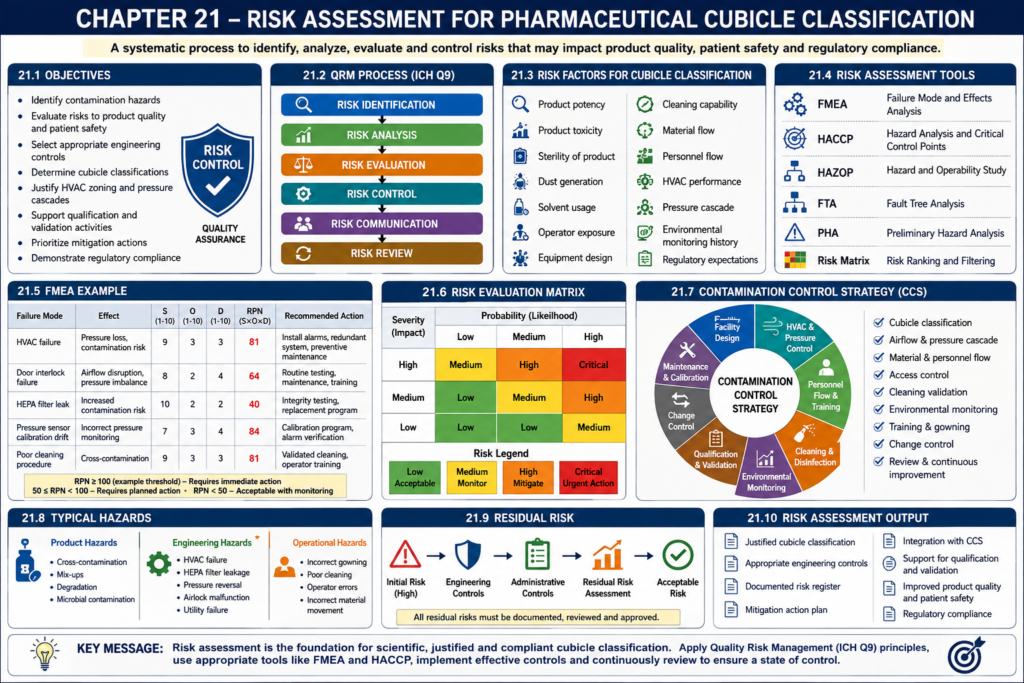
21.1 Introduction Risk assessment is the scientific foundation of modern pharmaceutical facility design. Regulatory authorities no longer accept cubicle classifications,
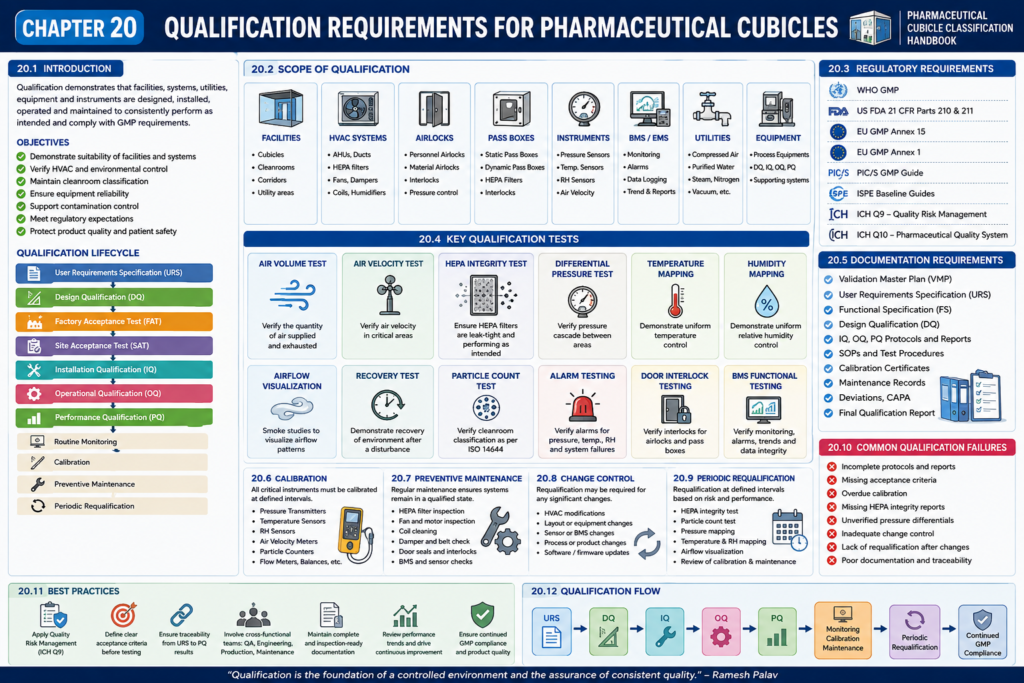
20.1 Introduction Qualification is a documented process that demonstrates that facilities, utilities, equipment, instruments, and environmental control systems are properly
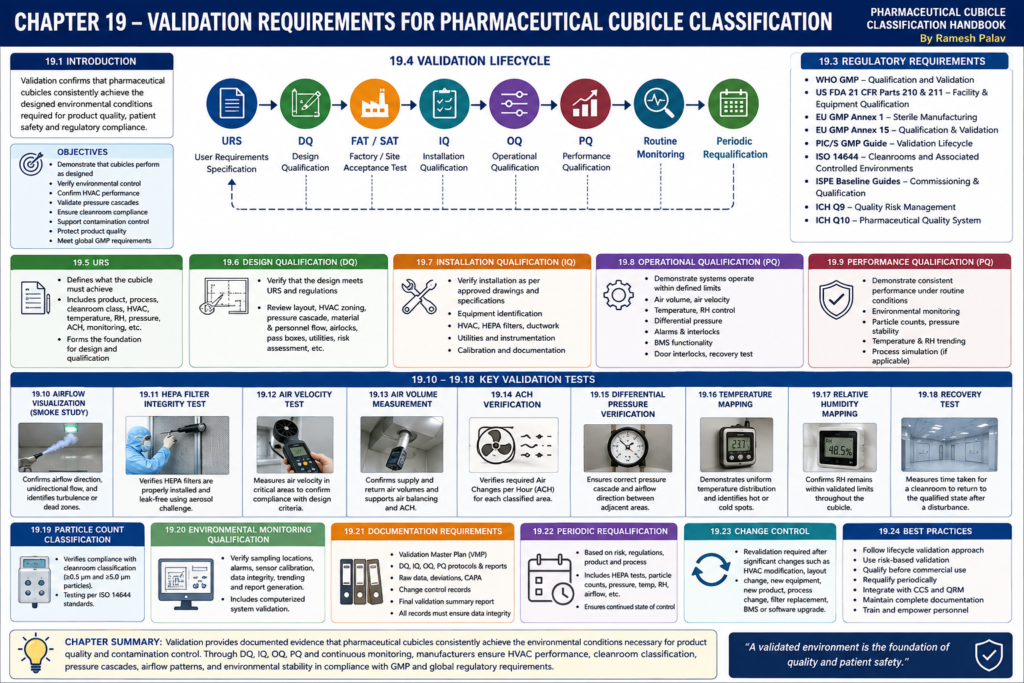
19.1 Introduction Validation is a documented process that provides a high degree of assurance that pharmaceutical facilities, equipment, utilities, and
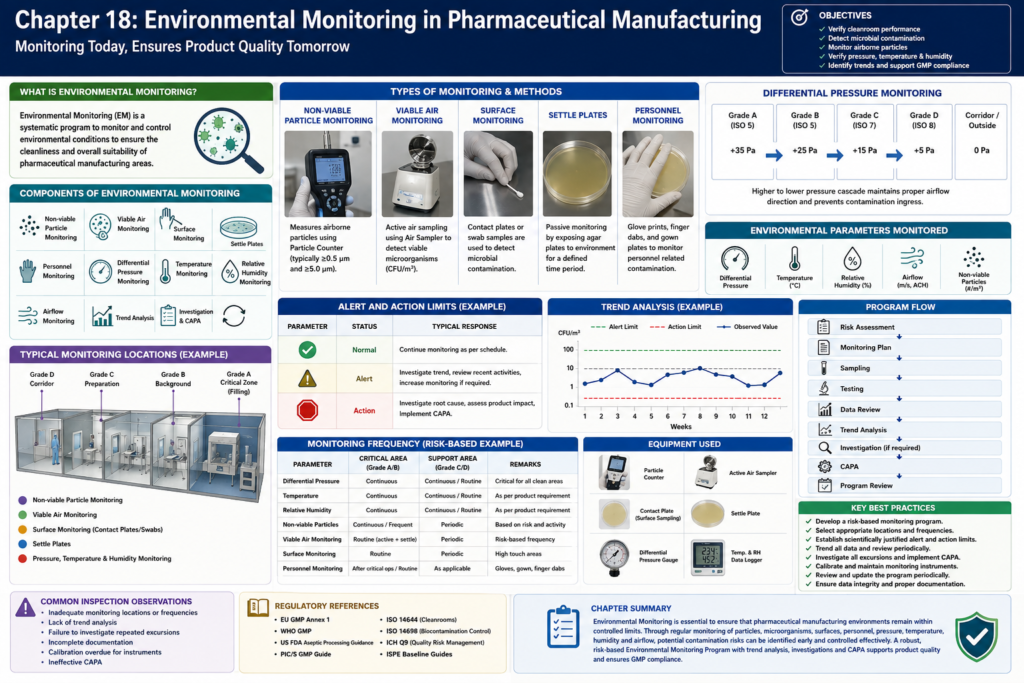
18.1 Introduction Environmental Monitoring (EM) is a systematic program used to verify that pharmaceutical manufacturing environments remain in a state