
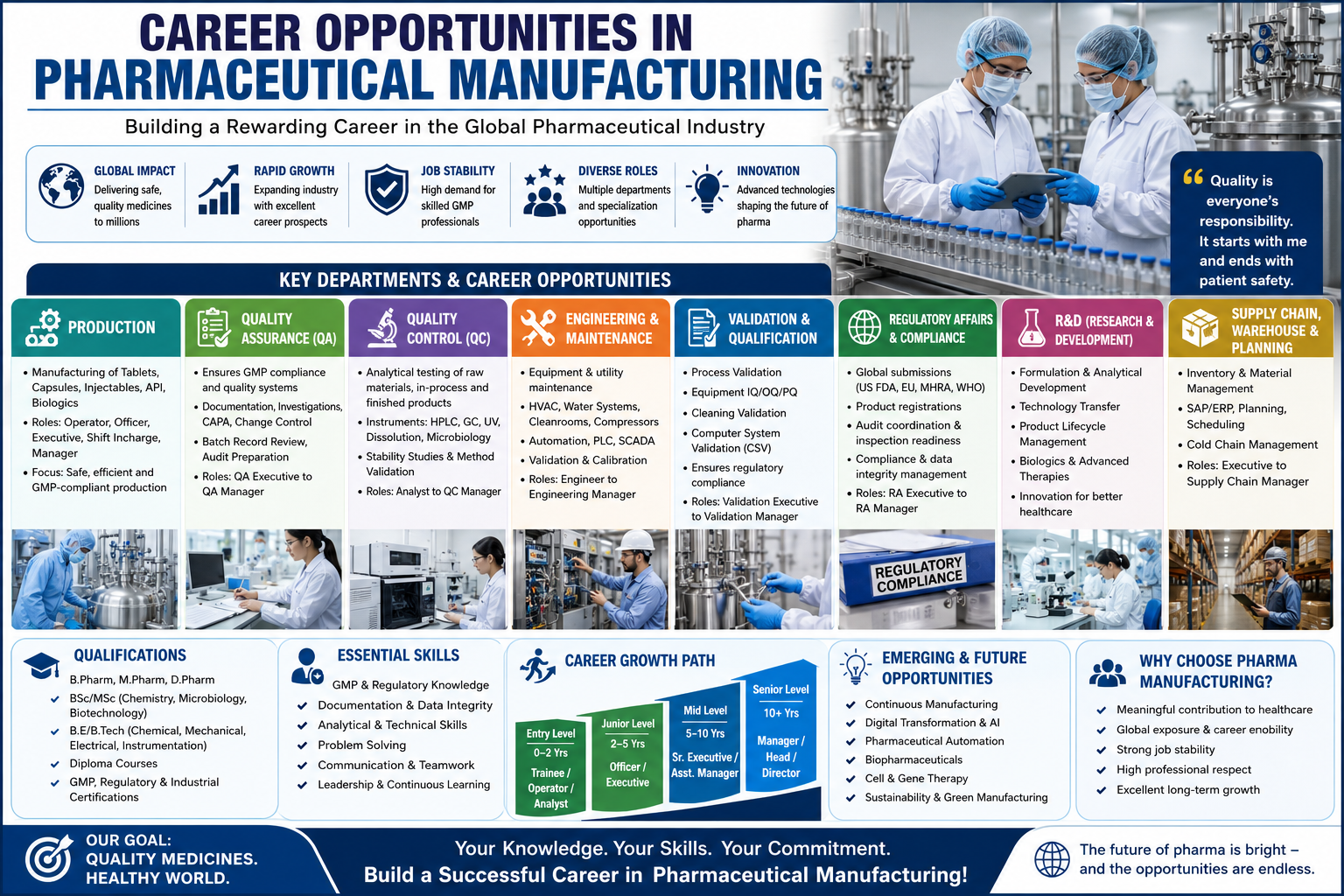
The pharmaceutical manufacturing industry plays a critical role in global healthcare by producing life-saving medicines, vaccines, biologics, and healthcare products. From common tablets and capsules to advanced biologic therapies and sterile injectables, pharmaceutical manufacturing ensures that safe, effective, and high-quality medicines reach patients worldwide.
Over the last two decades, the global pharmaceutical sector has experienced tremendous growth due to increasing healthcare demands, technological advancements, chronic disease prevalence, aging populations, and expanding access to healthcare services. Countries such as India, the United States, Germany, Switzerland, China, and Ireland have become major pharmaceutical manufacturing hubs.
India, often referred to as the “Pharmacy of the World,” is one of the largest producers of generic medicines globally. Indian pharmaceutical companies supply medicines to more than 200 countries and are heavily regulated by international agencies such as the US FDA, WHO, MHRA, and EU GMP authorities. This rapid industrial growth has created enormous career opportunities in pharmaceutical manufacturing for skilled professionals across multiple disciplines.
Today, pharmaceutical manufacturing careers are considered among the most stable, technically rewarding, and globally recognized career paths. The industry offers opportunities for fresh graduates, diploma holders, pharmacists, engineers, microbiologists, chemists, and experienced professionals.
Why Pharmaceutical Manufacturing is a Promising Career Option
Several factors make pharma manufacturing an attractive career choice:
- Continuous global demand for medicines
- Strong job stability compared to many industries
- Opportunities for technical specialization
- Global exposure and international regulatory experience
- Fast-growing biologics and advanced therapy sectors
- Competitive salary growth
- Strong career progression pathways
- Increasing demand for GMP professionals
The pharmaceutical industry also provides opportunities across multiple functions beyond production, including Quality Assurance (QA), Quality Control (QC), Engineering, Validation, Regulatory Affairs, Supply Chain, and Research & Development (R&D).
For professionals interested in science, technology, healthcare, engineering, and compliance, pharmaceutical manufacturing offers a highly structured and growth-oriented career environment.
Overview of Career Opportunities in Pharma Manufacturing
Pharmaceutical companies consist of multiple departments working together to ensure product quality, compliance, and operational efficiency.
Major Departments in Pharmaceutical Manufacturing
| Department | Primary Function |
|---|---|
| Production | Manufacturing medicines |
| Quality Assurance (QA) | GMP compliance and quality systems |
| Quality Control (QC) | Testing and laboratory analysis |
| Engineering & Maintenance | Equipment and utility maintenance |
| Validation | Process and equipment qualification |
| Regulatory Affairs | Global regulatory compliance |
| Warehouse & Supply Chain | Material handling and planning |
| R&D | Product and process development |
| Microbiology | Environmental and sterility monitoring |
| Automation & IT | Digital systems and automation |
Manufacturing vs Non-Manufacturing Roles
Manufacturing Roles
These involve direct pharmaceutical production activities:
- Production operators
- Manufacturing executives
- Packing operators
- Shift incharges
- Manufacturing managers
Non-Manufacturing Roles
These support compliance, quality, engineering, and business operations:
- QA professionals
- QC analysts
- Regulatory affairs executives
- Validation engineers
- Supply chain planners
- Automation engineers
Both categories offer excellent long-term growth opportunities.
Opportunities for Freshers and Experienced Professionals
Freshers
Fresh graduates can start careers in:
- Production
- QA documentation
- QC laboratories
- Warehouse
- Microbiology labs
- Engineering trainee programs
Experienced Professionals
Experienced professionals can move into:
- Senior management
- Global compliance
- Regulatory strategy
- Technology transfer
- Continuous manufacturing
- Automation leadership
- International audit management
Production Department Careers
The production department is the backbone of pharmaceutical manufacturing.
Roles and Responsibilities in Production
Production professionals are responsible for:
- Manufacturing operations
- Equipment operation
- Batch execution
- Cleaning activities
- Documentation
- Process monitoring
- Line clearance
- Yield reconciliation
- GMP compliance
Types of Pharmaceutical Manufacturing Roles
OSD (Oral Solid Dosage) Manufacturing
Includes:
- Tablet manufacturing
- Capsule filling
- Granulation
- Compression
- Coating
- Packing
Injectable Manufacturing
Includes:
- Sterile filling
- Aseptic operations
- Vial and ampoule filling
- Sterilization processes
API Manufacturing
Active Pharmaceutical Ingredient manufacturing involves:
- Chemical synthesis
- Reactor operations
- Solvent handling
- Process chemistry
Biologics Manufacturing
Includes:
- Cell culture operations
- Fermentation
- Protein purification
- Bioreactor management
Typical Production Designations
| Designation | Experience Level |
|---|---|
| Production Operator | Entry level |
| Production Officer | Junior level |
| Executive | Mid-level |
| Shift Incharge | Supervisory |
| Production Manager | Senior management |
Required Qualifications and Technical Skills
Production careers generally require:
- B.Pharm
- D.Pharm
- BSc Chemistry
- Diploma in Engineering
- Mechanical/Chemical Engineering
Key technical skills include:
- GMP understanding
- SOP compliance
- Equipment operation
- Documentation practices
- Process understanding
- Safety awareness
GMP and SOP Knowledge Expectations
Pharmaceutical companies expect professionals to understand:
- Good Manufacturing Practices (GMP)
- Standard Operating Procedures (SOPs)
- Good Documentation Practices (GDP)
- Data integrity principles
- Contamination control
- Deviation reporting
For example, a production executive working in tablet compression must understand:
- Compression parameters
- Weight variation controls
- In-process checks
- Batch documentation requirements
Quality Assurance (QA) Careers
Quality Assurance is one of the most respected and high-demand career areas in pharma manufacturing.
Role of QA in Pharmaceutical Manufacturing
QA ensures that products are consistently manufactured according to regulatory and GMP standards.
QA professionals handle:
- Documentation review
- Deviation investigations
- CAPA management
- Change control
- Audit preparation
- Batch record review
- Vendor qualification
- SOP management
Documentation and Compliance Activities
QA departments maintain:
- Batch Manufacturing Records (BMR)
- Standard Operating Procedures
- Validation documents
- Training records
- Investigation reports
A QA executive may review manufacturing records before batch release to ensure complete compliance.
Audit Preparation and Inspection Readiness
QA teams play a major role during:
- US FDA inspections
- WHO audits
- MHRA audits
- Customer audits
Inspection readiness requires:
- Strong documentation systems
- Training compliance
- Data integrity compliance
- Investigation management
Career Growth in QA
QA career progression often follows:
- QA Officer
- QA Executive
- Senior Executive
- Assistant Manager
- QA Manager
- Head QA
- Site Quality Head
QA professionals with strong compliance knowledge are highly valued globally.
Skills Required for QA Professionals
Essential skills include:
- GMP knowledge
- Attention to detail
- Documentation expertise
- Investigation handling
- Communication skills
- Audit management
- Risk assessment knowledge
Quality Control (QC) Careers
Quality Control focuses on laboratory testing and analytical activities.
Analytical Laboratory Roles
QC analysts perform:
- Raw material testing
- In-process testing
- Finished product analysis
- Stability studies
- Method validation
Key Instruments Used in QC
Instrumentation Careers Include:
- HPLC analysis
- GC operation
- UV spectroscopy
- FTIR testing
- Dissolution testing
Microbiology QC includes:
- Sterility testing
- Environmental monitoring
- Water testing
- Endotoxin analysis
Data Integrity Expectations in QC
Modern QC laboratories emphasize:
- ALCOA+ principles
- Electronic data management
- Audit trail review
- Instrument qualification
- Controlled documentation
Data integrity has become a major focus area during regulatory inspections.
QC Career Progression
| Position | Typical Role |
|---|---|
| QC Analyst | Testing activities |
| QC Executive | Instrument operation |
| Senior Analyst | Method troubleshooting |
| QC Manager | Laboratory management |
Specialization opportunities exist in:
- Analytical development
- Stability studies
- Microbiology
- Method validation
Engineering and Maintenance Careers
Engineering teams maintain pharmaceutical equipment and utilities.
Utility Systems in Pharma
Engineering professionals manage:
- HVAC systems
- Purified water systems
- Compressed air systems
- Steam systems
- Chillers
- Cleanroom infrastructure
Equipment Maintenance Roles
Responsibilities include:
- Preventive maintenance
- Breakdown maintenance
- Calibration support
- Spare management
- Equipment qualification support
Automation and Process Control Opportunities
Modern pharmaceutical facilities increasingly use:
- PLC systems
- SCADA systems
- Automated manufacturing lines
- Manufacturing Execution Systems (MES)
This has increased demand for automation engineers and Industry 4.0 professionals.
Industry 4.0 Opportunities in Pharma Engineering
Emerging areas include:
- Smart manufacturing
- Digital batch records
- AI-based monitoring
- Predictive maintenance
- IoT-enabled manufacturing systems
Pharma engineering jobs are evolving rapidly with digital transformation.
Validation and Qualification Careers
Validation professionals ensure pharmaceutical systems consistently perform as intended.
Key Validation Areas
Process Validation
Confirms manufacturing processes consistently produce quality products.
Equipment Qualification
Includes:
- IQ (Installation Qualification)
- OQ (Operational Qualification)
- PQ (Performance Qualification)
Cleaning Validation
Ensures cleaning procedures prevent cross-contamination.
Computer System Validation (CSV)
Validates software systems used in pharmaceutical operations.
Documentation and Regulatory Requirements
Validation requires extensive documentation including:
- Validation protocols
- Reports
- Risk assessments
- Traceability matrices
Validation careers are highly specialized and globally recognized.
Regulatory Affairs and Compliance Careers
Regulatory Affairs professionals ensure compliance with global health authorities.
Major Regulatory Agencies
Professionals work with regulations from:
- US FDA
- WHO
- MHRA
- EU GMP
- TGA
- Health Canada
Regulatory Responsibilities
Key activities include:
- Dossier submissions
- Regulatory documentation
- Product registrations
- Compliance gap assessments
- Inspection coordination
Regulatory Affairs jobs are increasingly important as companies expand globally.
Importance of Data Integrity and Compliance Culture
Modern pharmaceutical companies prioritize:
- Transparent documentation
- Electronic records compliance
- Ethical data management
- Inspection readiness
Compliance culture directly impacts company reputation and product approvals.
Research & Development (R&D) Careers
R&D drives pharmaceutical innovation.
Formulation Development
Scientists develop:
- Tablets
- Capsules
- Injectables
- Modified release formulations
- Biologic products
Analytical Method Development
R&D analytical scientists develop:
- Analytical methods
- Stability methods
- Validation strategies
Technology Transfer Careers
Technology transfer teams scale laboratory products into commercial manufacturing.
Responsibilities include:
- Process optimization
- Manufacturing support
- Batch scale-up
- Process troubleshooting
Product Lifecycle Management
R&D professionals support:
- Product improvements
- Regulatory changes
- New dosage forms
- Cost optimization
Opportunities in Biologics and Advanced Therapies
The future of pharma includes:
- Monoclonal antibodies
- Cell therapy
- Gene therapy
- Personalized medicine
Biopharma careers are expected to grow significantly over the next decade.
Supply Chain, Warehouse, and Planning Careers
Efficient supply chain operations are critical in pharmaceutical manufacturing.
Inventory Management
Warehouse professionals handle:
- Material receipt
- Dispensing
- Storage conditions
- Batch traceability
SAP and ERP Usage
Modern pharma companies use:
- SAP
- Oracle ERP
- Warehouse management systems
Professionals with ERP knowledge have strong career advantages.
Production Planning and Material Coordination
Planning teams coordinate:
- Production schedules
- Raw material availability
- Packaging materials
- Forecasting activities
Cold Chain Management
Critical for:
- Vaccines
- Biologics
- Temperature-sensitive medicines
Cold chain specialists are increasingly important in global pharmaceutical logistics.
Emerging Career Opportunities in Pharma Manufacturing
The pharmaceutical industry is rapidly evolving.
Continuous Manufacturing
Continuous manufacturing improves:
- Efficiency
- Product consistency
- Real-time monitoring
This creates demand for advanced process engineers.
Digital Transformation and AI
AI is being used for:
- Predictive maintenance
- Process monitoring
- Quality analytics
- Manufacturing optimization
Digital pharma professionals will see strong future demand.
Pharmaceutical Automation
Automation specialists manage:
- Robotics
- Automated filling lines
- Smart packaging systems
- Electronic manufacturing systems
Biopharmaceutical Manufacturing
Biopharma careers include:
- Cell culture specialists
- Bioprocess engineers
- Downstream processing experts
Cell and Gene Therapy Manufacturing
Advanced therapy manufacturing requires:
- Specialized cleanrooms
- Aseptic expertise
- Advanced quality systems
This is one of the fastest-growing pharmaceutical career sectors globally.
Sustainability and Green Manufacturing Roles
Companies increasingly focus on:
- Energy efficiency
- Waste reduction
- Sustainable manufacturing
- Green chemistry
Environmental sustainability roles are expanding in pharmaceutical operations.
Qualifications Required for Pharma Manufacturing Careers
Pharmacy Qualifications
- B.Pharm
- M.Pharm
- D.Pharm
Science Qualifications
- BSc Chemistry
- MSc Chemistry
- Biotechnology
- Microbiology
Engineering Qualifications
- Mechanical Engineering
- Chemical Engineering
- Electrical Engineering
- Instrumentation Engineering
Diploma Courses and Certifications
Useful certifications include:
- GMP certification
- Regulatory affairs courses
- Validation training
- SAP training
- Six Sigma certification
Skills Required to Build a Successful Pharma Career
Technical Knowledge
Understanding manufacturing processes and compliance requirements is essential.
GMP Understanding
Strong GMP knowledge is mandatory across all departments.
Communication and Teamwork
Pharmaceutical operations require cross-functional coordination.
Documentation Practices
Proper documentation is one of the most critical pharma industry skills.
Problem-Solving Skills
Professionals must handle:
- Deviations
- Process failures
- Equipment breakdowns
- Audit observations
Leadership and Continuous Learning
Career growth depends heavily on continuous technical and regulatory learning.
Salary Trends and Career Growth
Entry-Level Salary Expectations in India
| Role | Typical Salary Range |
|---|---|
| Production Trainee | ₹2–4 LPA |
| QA Executive | ₹3–5 LPA |
| QC Analyst | ₹2.5–5 LPA |
| Validation Executive | ₹4–6 LPA |
Mid-Level and Senior-Level Growth
Experienced professionals can earn significantly higher salaries based on:
- Technical expertise
- Regulatory exposure
- Leadership skills
- International audit experience
Senior management roles often include:
- Site Head
- Plant Head
- Quality Head
- Operations Director
Indian vs Global Salary Trends
Global pharmaceutical salaries are generally higher, especially in:
- United States
- Ireland
- Switzerland
- Germany
- Singapore
Professionals with US FDA exposure and strong compliance backgrounds are highly sought after internationally.
Factors Influencing Career Growth
Career progression depends on:
- GMP expertise
- Technical specialization
- Communication skills
- Audit handling experience
- Leadership capability
- Continuous training
Challenges in Pharma Manufacturing Careers
Despite excellent opportunities, the industry has challenges.
Regulatory Pressure
Pharmaceutical manufacturing is heavily regulated.
Shift Duties
Production and QC operations often require rotational shifts.
Documentation Workload
Documentation standards are extremely high.
Inspection Readiness
Facilities must remain audit-ready at all times.
High-Quality Expectations
Patient safety is directly connected to manufacturing quality.
However, these challenges also create strong professional development opportunities.
Tips for Freshers to Enter the Pharma Industry
Resume Preparation
A professional pharma resume should include:
- Educational qualifications
- Industrial training
- Technical skills
- GMP knowledge
- Internship experience
Interview Preparation
Freshers should prepare for:
- GMP concepts
- SOP understanding
- Basic pharmaceutical manufacturing processes
- Data integrity principles
Importance of GMP Knowledge
Even entry-level professionals are expected to understand:
- Good Documentation Practices
- Hygiene practices
- Contamination control
- SOP compliance
Internships and Industrial Training
Industrial exposure significantly improves employability.
Recommended areas for internships:
- Production
- QA
- QC
- Microbiology
- Validation
Networking and LinkedIn Usage
Professionals should actively:
- Build LinkedIn profiles
- Connect with industry professionals
- Attend pharma webinars
- Follow regulatory updates
Networking helps identify hidden pharmaceutical industry opportunities.
Future Scope of Careers in Pharmaceutical Manufacturing
The future of pharmaceutical manufacturing remains extremely promising.
Expansion of Global Pharma Manufacturing
Global healthcare demand continues to rise due to:
- Chronic diseases
- Aging populations
- Vaccine development
- Personalized medicine
India as a Global Pharma Hub
India continues expanding in:
- Generic manufacturing
- API production
- Vaccine manufacturing
- Contract manufacturing
- Biopharmaceutical production
This growth will generate thousands of new pharma jobs.
Future Hiring Trends
The highest demand areas are expected in:
- QA and compliance
- Validation
- Automation
- Biopharmaceutical manufacturing
- Regulatory affairs
- Data integrity
- Digital manufacturing
Demand for Skilled GMP Professionals
Companies increasingly prefer professionals with:
- Strong GMP understanding
- Regulatory exposure
- Technical specialization
- Problem-solving capability
Continuous learning will remain essential for long-term career success.
Conclusion
The pharmaceutical manufacturing industry offers one of the most stable, technically rewarding, and globally respected career paths available today. From production and QA to validation, engineering, regulatory affairs, biologics, and digital manufacturing, the industry provides diverse opportunities for professionals from pharmacy, science, engineering, and life science backgrounds.
As pharmaceutical companies continue expanding globally and adopting advanced technologies such as AI, automation, continuous manufacturing, and biopharmaceutical production, the demand for skilled GMP professionals will continue to rise.
For fresh graduates, this industry provides structured career growth, global exposure, and long-term stability. For experienced professionals, it offers opportunities to specialize, lead teams, manage global compliance, and contribute to life-saving healthcare products.
Success in pharmaceutical manufacturing careers depends on:
- Strong technical knowledge
- GMP compliance understanding
- Documentation discipline
- Continuous learning
- Adaptability to evolving technologies
Professionals who invest in skill development, regulatory understanding, and practical industry knowledge will remain highly valuable in the future pharmaceutical workforce.
The future of pharmaceutical manufacturing is not only growing — it is transforming into a highly digital, globally connected, and innovation-driven industry. This transformation will continue creating exciting career opportunities for the next generation of pharmaceutical professionals.
About the Author
Ramesh Palav is a pharmaceutical manufacturing professional with 21+ years of experience in Oral Solid Dosage manufacturing, production operations, GMP compliance, qualification, validation, QMS and operational excellence. Through Pharma Manufacturing Hub, he shares practical industry knowledge with pharmaceutical professionals, students and manufacturing leaders.
Published on : 08/07/2026