
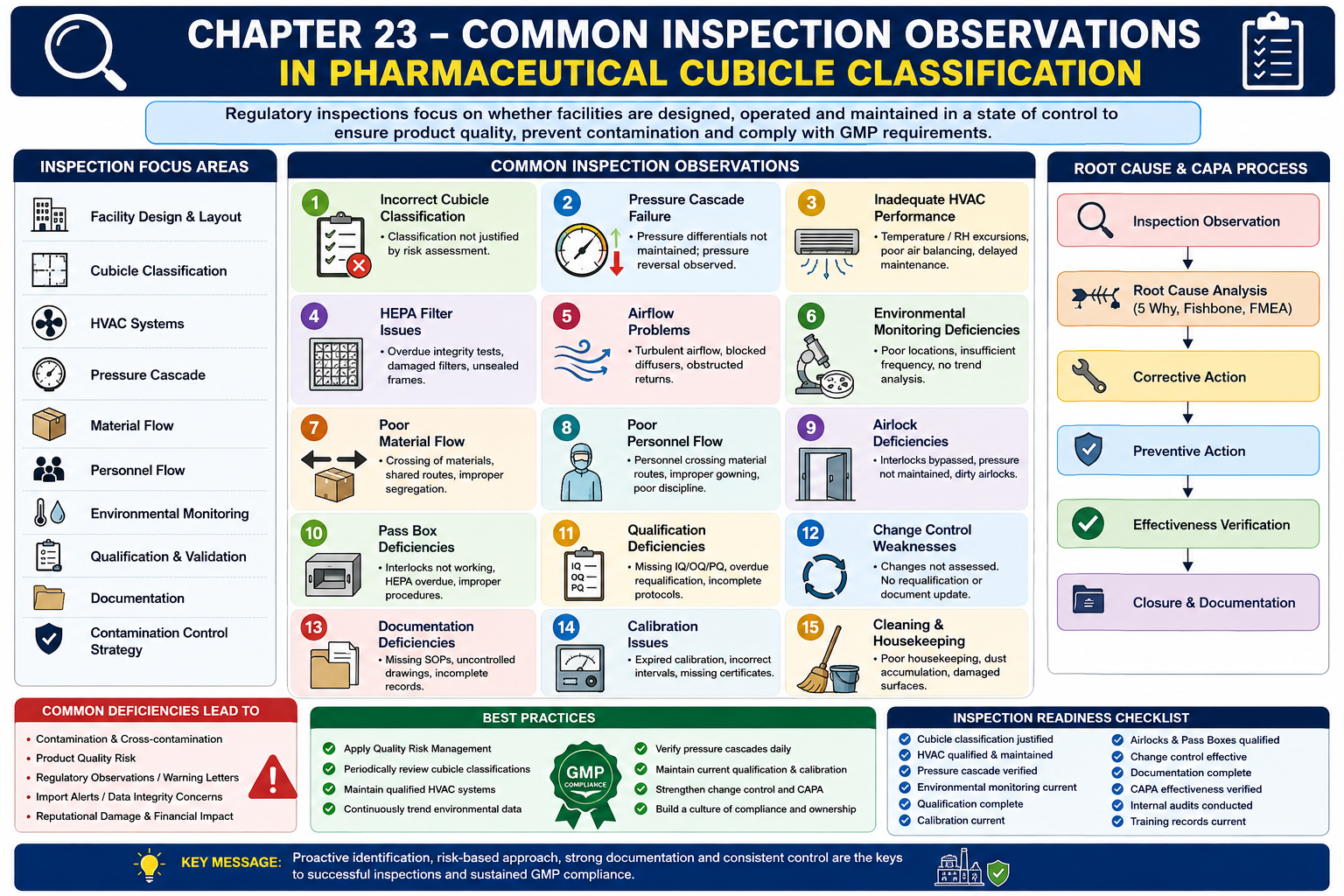
23.1 Introduction
Pharmaceutical regulatory inspections evaluate whether manufacturing facilities consistently operate in a state of control that protects product quality and patient safety. While facility design may initially comply with Good Manufacturing Practice (GMP) requirements, deficiencies often arise because of inadequate maintenance, poor operational discipline, ineffective change management, or insufficient Quality Risk Management (QRM).
Regulatory agencies such as the US FDA, WHO, EU Authorities, MHRA, PIC/S participating authorities, and other national inspectorates commonly identify recurring deficiencies related to pharmaceutical cubicle classification, HVAC performance, contamination control, environmental monitoring, and facility qualification.
Understanding these observations enables manufacturers to proactively strengthen their Pharmaceutical Quality System (PQS), improve inspection readiness, and reduce the risk of regulatory action.
23.2 Objectives of Inspection Readiness
The objectives are to:
- Maintain GMP compliance.
- Prevent contamination and cross-contamination.
- Ensure facility remains in a qualified state.
- Identify deficiencies before inspections.
- Strengthen Quality Risk Management.
- Improve contamination control.
- Enhance patient safety.
- Promote continuous improvement.
23.3 Regulatory Inspection Focus Areas
Inspectors typically evaluate:
Facility Design
        │
Cubicle Classification
        │
HVAC Systems
        │
Pressure Cascade
        │
Material Flow
        │
Personnel Flow
        │
Environmental Monitoring
        │
Qualification & Validation
        │
Documentation
        │
Contamination Control Strategy
23.4 Common Inspection Observation 1 – Incorrect Cubicle Classification
Observation
Manufacturing rooms are classified without adequate scientific justification.
Typical Findings
- Classification copied from another facility.
- No documented risk assessment.
- Product risk not considered.
- Process changes not reflected.
Root Cause
- Poor Quality Risk Management.
- Inadequate engineering review.
- Weak change control.
Recommended CAPA
- Perform documented risk assessment.
- Review cubicle classification.
- Update facility drawings.
- Revise SOPs and training.
23.5 Common Inspection Observation 2 – Pressure Cascade Failure
Observation
Required pressure differentials are not maintained.
Typical Findings
- Pressure reversal.
- Unstable room pressure.
- Alarm failures.
- Incorrect balancing.
Possible Causes
- Damaged door seals.
- HVAC imbalance.
- Sensor calibration drift.
- Excessive door opening.
CAPA
- Rebalance HVAC.
- Replace damaged seals.
- Calibrate pressure sensors.
- Review operator practices.
23.6 Common Inspection Observation 3 – Inadequate HVAC Performance
Observation
HVAC systems fail to maintain qualified environmental conditions.
Findings
- Temperature excursions.
- Relative humidity excursions.
- Poor air balancing.
- Dirty filters.
- Delayed preventive maintenance.
Corrective Actions
- Perform HVAC qualification review.
- Replace filters where required.
- Update preventive maintenance schedules.
- Trend environmental data.
23.7 Common Inspection Observation 4 – HEPA Filter Issues
Typical deficiencies include:
- Overdue integrity testing.
- Damaged filters.
- Incomplete test documentation.
- Unsealed filter frames.
- Failure to investigate failed tests.
Preventive Measures
- Scheduled integrity testing.
- Filter life-cycle management.
- Proper installation verification.
- Qualified maintenance personnel.
23.8 Common Inspection Observation 5 – Airflow Problems
Findings
- Turbulent airflow.
- Blocked air supply diffusers.
- Obstructed return grilles.
- Equipment affecting airflow.
- Incomplete smoke study documentation.
Corrective Actions
- Repeat airflow visualization studies.
- Modify equipment layout if required.
- Verify air balancing.
- Update airflow qualification reports.
23.9 Common Inspection Observation 6 – Environmental Monitoring Deficiencies
Findings
- Poor sampling locations.
- Insufficient monitoring frequency.
- Missing trend analysis.
- Repeated excursions without investigation.
- Outdated alert and action limits.
CAPA
- Review Environmental Monitoring Program (EMP).
- Perform risk assessment.
- Trend historical data.
- Revise sampling plan.
- Strengthen investigation procedures.
23.10 Common Inspection Observation 7 – Poor Material Flow
Findings
- Crossing of raw and finished materials.
- Shared transfer routes.
- Improper warehouse segregation.
- Material stored in airlocks.
- Inadequate status labeling.
Recommended Improvements
- Redesign material flow.
- Use dedicated Material Airlocks (MALs).
- Improve visual management.
- Review warehouse SOPs.
23.11 Common Inspection Observation 8 – Poor Personnel Flow
Findings
- Personnel crossing material routes.
- Improper gowning.
- Uncontrolled access.
- Inadequate change rooms.
- Poor operator discipline.
Corrective Actions
- Redesign personnel routes.
- Retrain personnel.
- Improve access control.
- Audit gowning practices.
23.12 Common Inspection Observation 9 – Airlock Deficiencies
Typical findings:
- Door interlocks bypassed.
- Pressure differentials not maintained.
- Dirty airlocks.
- Airlocks used for storage.
- Alarm systems not functioning.
CAPA
- Verify interlock functionality.
- Review cleaning schedules.
- Remove unnecessary materials.
- Requalify airlocks.
23.13 Common Inspection Observation 10 – Pass Box Deficiencies
Typical observations:
- Simultaneous door opening.
- HEPA filter qualification overdue.
- Damaged door seals.
- Inadequate cleaning records.
- Incorrect material transfer procedures.
Preventive Actions
- Routine maintenance.
- Door interlock testing.
- SOP revision.
- Operator training.
23.14 Common Inspection Observation 11 – Qualification Deficiencies
Findings
- Missing IQ/OQ/PQ reports.
- Overdue requalification.
- Incomplete protocols.
- Unapproved deviations.
- Missing acceptance criteria.
CAPA
- Complete qualification documentation.
- Review Validation Master Plan (VMP).
- Implement periodic review.
23.15 Common Inspection Observation 12 – Change Control Weaknesses
Typical findings:
- HVAC modifications without assessment.
- New equipment installed without requalification.
- Updated layouts not reflected in drawings.
- Unapproved engineering changes.
Corrective Actions
- Strengthen change control procedures.
- Require QA approval.
- Evaluate qualification impact.
- Update documentation.
23.16 Common Inspection Observation 13 – Documentation Deficiencies
Inspectors frequently identify:
- Missing SOPs.
- Uncontrolled drawings.
- Incomplete logbooks.
- Missing calibration records.
- Inconsistent documentation.
- Inadequate document review.
Documentation should comply with ALCOA+ principles.
23.17 Common Inspection Observation 14 – Calibration Issues
Typical findings:
- Expired calibration.
- Incorrect calibration intervals.
- Missing calibration labels.
- Incomplete calibration certificates.
Instruments
- Pressure sensors.
- Temperature sensors.
- RH sensors.
- Particle counters.
- Air velocity meters.
23.18 Common Inspection Observation 15 – Cleaning and Housekeeping
Typical findings:
- Damaged floors.
- Peeling paint.
- Dust accumulation.
- Improper cleaning practices.
- Cleaning equipment stored incorrectly.
Best Practices
- Routine inspections.
- Preventive maintenance.
- Cleaning verification.
- Surface integrity review.
23.19 Root Cause Analysis
Every observation should undergo structured investigation.
Typical methods:
- 5 Why Analysis
- Fishbone (Ishikawa) Diagram
- Fault Tree Analysis
- FMEA Review
The selected method should be appropriate for the complexity of the issue.
23.20 CAPA Strategy
Inspection Observation
         │
         ▼
Root Cause Analysis
         │
         ▼
Corrective Action
         │
         ▼
Preventive Action
         │
         ▼
Effectiveness Verification
         │
         ▼
Closure
CAPA effectiveness should be verified and documented before closure.
23.21 Inspection Readiness Program
An effective inspection readiness program includes:
- Internal GMP audits.
- Routine engineering inspections.
- HVAC performance reviews.
- Environmental monitoring reviews.
- Qualification status reviews.
- Documentation audits.
- Personnel training.
- Mock regulatory inspections.
23.22 Best Practices
- Apply Quality Risk Management to all facility changes.
- Periodically review cubicle classifications.
- Maintain qualified HVAC systems.
- Continuously trend environmental monitoring data.
- Verify pressure cascades daily where appropriate.
- Maintain current qualification and calibration records.
- Strengthen change control and CAPA systems.
- Conduct routine management reviews of facility performance.
23.23 Case Study – Regulatory Inspection of a Tablet Manufacturing Facility
Facility
Multi-product Oral Solid Dosage (OSD) Plant
Inspection Findings
| Observation | Root Cause | CAPA |
|---|---|---|
| Pressure fluctuations in compression room | HVAC balancing issue | Rebalanced AHU and recalibrated sensors |
| Material temporarily stored in airlock | Inadequate material staging | Created dedicated staging area and revised SOP |
| Environmental monitoring trend not reviewed | Lack of periodic review | Implemented monthly trend review meetings |
| HEPA integrity testing overdue | PM scheduling weakness | Updated preventive maintenance program |
Results
- Improved contamination control.
- Stable environmental conditions.
- Enhanced inspection readiness.
- Successful follow-up inspection.
23.24 Inspection Readiness Checklist
| Checkpoint | Status |
|---|---|
| Cubicle classification scientifically justified | ☐ |
| HVAC systems qualified | ☐ |
| Pressure cascades verified | ☐ |
| Environmental Monitoring Program current | ☐ |
| HEPA integrity tests completed | ☐ |
| Airlocks and Pass Boxes qualified | ☐ |
| Qualification documentation complete | ☐ |
| Calibration current | ☐ |
| Change control effective | ☐ |
| CAPA effectiveness verified | ☐ |
| Internal audit completed | ☐ |
| Personnel training current | ☐ |
23.25 Continuous Improvement Cycle
Internal Audit
      │
Inspection Findings
      │
Risk Assessment
      │
CAPA
      │
Qualification Review
      │
Training
      │
Management Review
      │
Continuous Improvement
Chapter Summary
Regulatory inspections consistently demonstrate that pharmaceutical facility compliance depends not only on initial design but also on sustained operational control. Common inspection observations frequently relate to cubicle classification, HVAC performance, pressure cascades, environmental monitoring, qualification, documentation, and change management. By applying robust Quality Risk Management, performing regular self-inspections, implementing effective CAPA, and maintaining inspection-ready documentation, pharmaceutical manufacturers can strengthen contamination control, improve operational reliability, and maintain a state of continuous GMP compliance.
Key Takeaways
- Most inspection observations arise from inadequate implementation and maintenance rather than poor initial design.
- Common deficiencies include pressure cascade failures, HVAC performance issues, environmental monitoring gaps, incomplete qualification, and weak documentation.
- Effective root cause analysis and CAPA are essential to prevent recurrence.
- Regular internal audits, mock inspections, and management reviews improve inspection readiness.
- A culture of continuous improvement, supported by Quality Risk Management and a strong Pharmaceutical Quality System, is fundamental to long-term regulatory compliance.
Next Chapter
Chapter 24 – Best Practices for Pharmaceutical Cubicle Classification, covering risk-based facility design, scientific zoning, dedicated cubicles for potent products, HVAC optimization, contamination control strategies, digital monitoring, lifecycle management, sustainability, operational excellence, and practical recommendations for world-class pharmaceutical manufacturing facilities.
About the Author
Ramesh Palav is a pharmaceutical manufacturing professional with 21+ years of experience in Oral Solid Dosage manufacturing, production operations, GMP compliance, qualification, validation, QMS and operational excellence. Through Pharma Manufacturing Hub, he shares practical industry knowledge with pharmaceutical professionals, students and manufacturing leaders.